
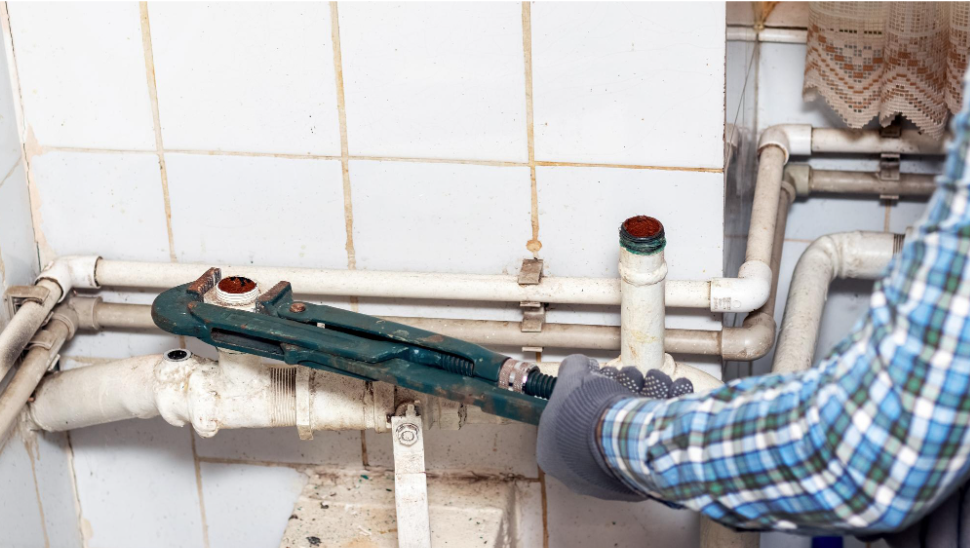
Repiping in Overland Park, KS becomes a real conversation for most homeowners the same way it always does, not because they went looking for it, but because a pipe somewhere in the house has started leaking and it is not the first time this year. One pinhole leak is a repair. Three or four in different rooms over a couple of years is usually something bigger.
The age and construction of a home tells you a lot about what is likely running through its walls. Overland Park has a real mix of housing stock, from established neighborhoods built with galvanized steel or early copper decades ago to newer construction using modern PEX piping, and the material behind the wall matters more than most homeowners realize when a leak shows up.
Whole-home repiping sounds like a bigger project than it usually turns out to be in practice, and knowing what actually triggers the need for it helps homeowners make the call before a slow leak turns into water damage behind a wall or under a slab.
This guide covers why older Overland Park homes eventually need repiping, the warning signs worth paying attention to, what a repiping project actually involves, and how to decide whether it makes sense for your home. Plumbing repairs on an aging system can only go so far before the underlying pipe material itself becomes the real problem.
In this article, you will learn about:
- Why older Overland Park homes eventually need repiping
- Warning signs it's time to consider whole-home repiping
- What a repiping project actually involves
- Deciding if repiping is worth it for your home
Keep reading to find out which pipe materials fail the fastest, and the signs that mean a patch job is no longer the right answer.
Why older Overland Park homes eventually need repiping
Every pipe material has a lifespan, and none of them last forever. What varies is how each one fails, how much warning it gives before it does, and how old a home typically needs to be before that failure starts showing up in a meaningful way.
Knowing which material is likely running through your home's walls, based on the decade it was built, gives you a rough sense of the timeline you are working with before repiping becomes a real consideration.
Galvanized steel pipes and how they fail from the inside
Galvanized steel pipe was standard in homes built before the 1960s, and it fails in a very specific way: the zinc coating that protects the steel underneath wears away over decades, and rust builds up on the interior of the pipe until the opening narrows and water pressure drops throughout the house. By the time pressure loss becomes noticeable, the pipe has often been corroding from the inside for years.
The U.S. Environmental Protection Agency estimates that roughly 4 million lead service lines remain in use nationwide, and galvanized pipe requiring replacement adds a substantial number on top of that figure. Older Overland Park properties with original plumbing sit squarely in the category of homes most likely to still have galvanized supply lines somewhere in the system.
Copper pipe pinhole leaks and what causes them
Copper pipe, common from the 1960s through the 1980s and still used today, generally lasts longer than galvanized steel, but it has its own failure pattern. Pinhole leaks develop when water chemistry, high water velocity, or manufacturing inconsistencies wear through the pipe wall from the inside at a single point rather than corroding evenly.
A few conditions tend to accelerate copper pinhole leaks:
- Soft or acidic water that is more aggressive toward copper over time
- Excessive water velocity from undersized pipe or high water pressure
- Flux residue left inside the pipe from the original soldering work
- Stray electrical current finding a path through the plumbing system
One pinhole leak rarely means the whole system is failing. A pattern of them across different rooms, especially within a short span of time, usually does.
How your home's age points to what's likely inside the walls
A home's original construction date is the single best clue to what material is likely behind the drywall, assuming no previous repiping has taken place. These general windows are a useful starting point, though only an inspection confirms what is actually there:
- Before the 1960s: galvanized steel is the most likely original material
- 1960s through the 1980s: copper is the most common choice
- 1980s through the 2000s: a mix of copper and early plastic piping
- 2000s and later: PEX is the standard in most new construction
Homes built more recently, or those that already went through a previous pipe repair or full repiping project, are far more likely to have PEX, which behaves very differently from either metal option and rarely develops the same leaking pipe issues that plague older galvanized and copper systems. Checking your home's build date against these general windows gives you a starting point before a plumber ever inspects the actual pipe.
Warning signs it's time to consider whole-home repiping
Not every leak means the whole system needs replacing. The signs below, especially when more than one shows up together, are what separate an isolated repair from a home that has outgrown patch-and-repair as a long-term strategy.
Paying attention to the pattern over time matters more than reacting to any single incident, since one leak in isolation rarely tells the full story.
Discolored water and changing water pressure
Rust-colored or brownish water, especially right after the water has sat unused for a few hours, points to corrosion building up inside galvanized pipe. This is different from a one-time discoloration after nearby utility work, which usually clears up within a day.
Water pressure that has gradually dropped over months or years, rather than failing suddenly, often means the interior diameter of the home's supply lines has narrowed from corrosion buildup. A single low-pressure fixture usually points to a local problem, while pressure loss throughout the house points to something happening further upstream in the main lines.
Frequent pinhole leaks in different spots
A single pinhole leak is a normal, isolated repair. Two or three leaks appearing in different rooms within a year or two is a pattern worth taking seriously, since it suggests the pipe material itself, not any one section, is reaching the end of its service life.
Track these details whenever a leak shows up, since the pattern matters more than any single incident:
- The room and approximate location of each leak
- How long the home has been in your ownership versus how old the plumbing actually is
- Whether the leaking sections are all the same pipe material
- How much time passed between each repair
Visible corrosion at exposed fittings and valves
Areas where pipe is visible, like a basement ceiling, a crawl space, or under a sink, offer a preview of what the hidden sections of pipe likely look like too. Green or blue-green staining around copper fittings signals active corrosion, while rust-colored buildup around a galvanized joint points to the same process happening on steel.
A water heater connected to aging supply lines sometimes shows the earliest visible signs, since the fittings at that connection point see constant flow and temperature changes that accelerate wear. Bathroom plumbing under a vanity is another common spot to check, since the supply valves there are usually easy to access without any tools. Checking the pipe right at the water heater connection is often the fastest way to get a preview of what is happening elsewhere.
What a repiping project actually involves
A whole-home repipe sounds disruptive in theory, but the actual process is more contained than most homeowners expect, especially compared to the ongoing disruption of repeated leak repairs over several years.
Understanding the steps ahead of time makes the process far less intimidating once it is actually scheduled.
PEX versus copper for a whole-home repipe
Piping and repiping work today most often means PEX, which has become the standard choice for most residential repiping projects, and for good reason. It resists the corrosion that affects both galvanized steel and copper, flexes slightly to handle minor freezing without splitting the way rigid pipe does, and installs faster since it requires fewer joints and no soldering.
Copper remains an option for homeowners who prefer it, particularly in exposed areas where flexibility matters less than long-term durability, but the higher material cost and labor time involved in soldering every joint make it a less common choice for a full repipe today compared to a few decades ago. A quick comparison of the two:
- PEX: flexible, resists corrosion, faster to install, lower material cost
- Copper: rigid, proven long-term track record, higher material and labor cost
- PEX: fewer joints, fewer potential leak points over the system's life
- Copper: preferred by some homeowners for exposed, visible runs
How a repipe is sequenced room by room
A repiping project typically moves through a home in a planned sequence, working section by section rather than disconnecting the entire water supply all at once. This keeps most of the house functional with water access throughout the project instead of shutting everything down for the full duration.
The general order usually looks like this:
- The main shutoff valve and the primary supply line get addressed first
- Each bathroom is repiped and reconnected before moving to the next
- The kitchen and any remaining fixtures follow
- The water heater connection gets tied into the new piping last
- A full pressure test confirms every connection before walls are closed up
Patching walls and restoring the home afterward
Accessing pipe inside walls requires opening sections of drywall, and a quality repiping job accounts for this from the start rather than treating it as an afterthought. Most repiping crews coordinate the drywall patching directly, or work with a trusted contractor who handles it immediately after the plumbing work wraps up.
The openings needed for a modern repipe using PEX are generally smaller and more limited than homeowners expect, since PEX's flexibility allows it to route through smaller access points than rigid pipe ever could. This keeps the drywall and paint work involved in a repipe more manageable than the project's overall scope might suggest.
Deciding if repiping is worth it for your home
The decision between continuing to repair individual leaks and committing to a full repipe usually comes down to a straightforward cost and frequency comparison, once the pattern of repairs becomes clear.
There is no universal answer that fits every home, but a few consistent factors tend to tip the decision one way or the other.
Repiping versus repeatedly repairing pinhole leaks
A single repair costs far less than a whole-home repipe in isolation, but that comparison changes once repairs start happening every few months in different parts of the house. At that point, the cumulative cost of repeated repairs, plus the water damage risk each new leak carries, often exceeds what a planned repipe would have cost from the start.
Emergency plumbing services called out for a burst pipe in the middle of the night tend to cost more than the same leak repair scheduled during normal business hours, which is another factor that pushes the math toward a planned repipe once leaks become frequent. Benjamin Franklin Plumbing of Kansas City periodically runs special offers on repiping projects, which can help offset the upfront cost once the decision is made.
How age and pipe material affect the decision
A home with galvanized steel pipe nearing or past 60 years old is generally a stronger candidate for repiping than a newer home with a single isolated copper pinhole leak. The material itself is the deciding factor more often than the home's overall age, since a well-maintained copper system can outlast a poorly maintained galvanized one by decades.
Homeowners planning to stay in a home long term get more value from a repipe than those planning to sell soon, simply because the investment pays off over years of avoided repairs rather than a single transaction.
Getting a professional assessment before committing
A camera inspection or pressure test gives a far clearer picture of a home's actual pipe condition than guessing based on age alone. Some homes with older construction dates already went through a partial or full repipe at some point in their history, which changes the calculation entirely.
Residential plumbing built up over decades of small updates and repairs sometimes has a mix of pipe materials throughout the house, which is exactly the kind of situation a professional assessment untangles far more reliably than a homeowner guessing room by room.
Conclusion
Repiping in Overland Park, KS is rarely a decision homeowners make on a whim. It usually follows a pattern of repeated leaks, dropping water pressure, or visible corrosion that makes clear the pipe material itself, not any single fitting or joint, has reached the end of its useful life.
Knowing what material is likely behind your walls based on your home's age, and tracking the pattern of any leaks that do show up, gives you the information needed to make that call with confidence rather than reacting to each new leak as an isolated surprise.
If your home has had more than one pipe leak in the past couple of years, Benjamin Franklin Plumbing of Kansas City can assess what is actually happening behind the walls. Ask about the club membership program for regular plumbing checkups that catch pipe problems long before they turn into a repiping emergency.

 Your Privacy Choices