
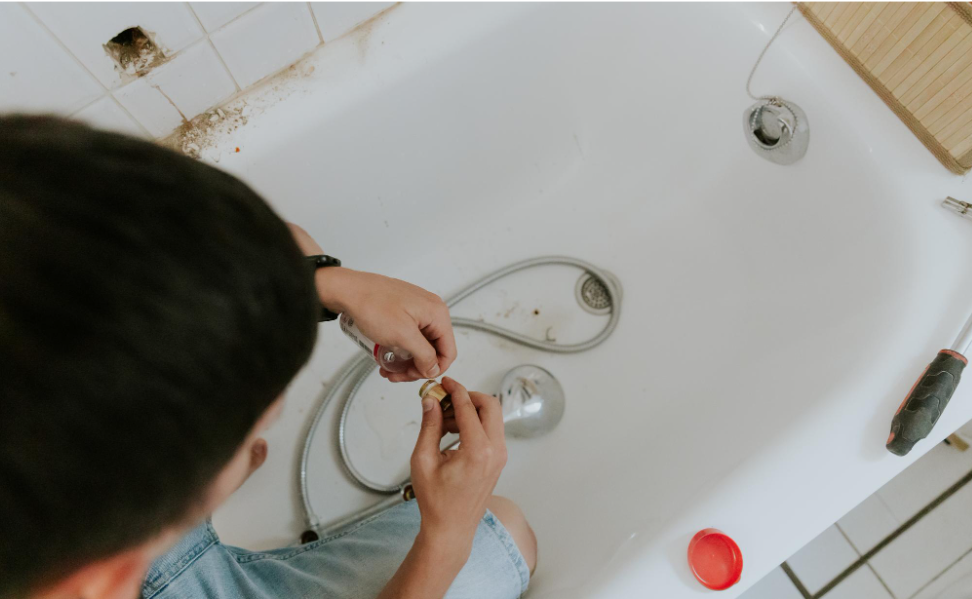
A bathtub is one of those fixtures homeowners expect to just work, quietly, for decades, until a crack spreads, a drain backs up, or the surface gets so worn it feels more like sandpaper than porcelain. Bathtub problems tend to fall into a short list of predictable categories once you know what to look for.
Kansas City's mix of older housing stock and hard water both play a role in how quickly tubs and their plumbing wear out. A hairline crack, a corroded overflow drain, or a leak hiding behind the wall can all look minor at first, and each calls for a different response.
Benjamin Franklin Plumbing of Kansas City has been repairing and installing bathtubs across the metro since 1955, and it remains one of the more common requests the team fields. This guide walks through why tubs crack, leak, or drain slowly, the warning signs that mean a repair will not hold, and what actually goes into installing a new bathtub correctly.
In this article, you will learn about:
- Why bathtubs crack, leak, or drain slowly
- Warning signs a bathtub needs more than a quick fix
- Bathtub safety and what Kansas City homeowners should know
- Choosing and installing a new bathtub the right way
Keep reading to find out whether that hairline crack is cosmetic or a sign it is time for a new tub.
Why bathtubs crack, leak, or drain slowly
Most bathtub complaints trace back to one of three sources: surface or structural damage to the tub itself, a failure somewhere in the drain and overflow assembly, or a leak hiding in the plumbing behind the wall. Figuring out which one applies determines whether the fix is a same-day repair or a bigger job.
A bathtub is really a basin connected to two separate systems: the drain and overflow assembly that lets water out, and the supply plumbing behind the wall that feeds the faucet and shower. A failure in either system can look identical from the outside, which is why diagnosis matters before jumping to a fix.
Below are the three failure patterns Benjamin Franklin techs see most often on calls across Kansas City, Overland Park, and Lee's Summit.
The tub surface is cracked, chipped, or worn
Surface damage varies a lot depending on the tub's material. Porcelain-coated cast iron and steel tubs chip when something heavy is dropped in them, and once the coating is broken, the exposed metal underneath rusts and the damage spreads outward from that point. Fiberglass and acrylic tubs crack rather than chip, usually from age, flexing under weight, or a poorly supported installation that lets the basin flex more than it should.
A worn, dull, or stained surface that has not actually cracked is often a refinishing candidate rather than a full replacement, since resurfacing can restore the look of an otherwise structurally sound tub for a fraction of replacement cost. A crack that runs through the material, rather than sitting on the surface coating, means refinishing will not hold and replacement becomes the more realistic option.
Hairline cracks are easy to dismiss early on, but they widen under the stress of hot and cold water cycling and the weight of someone stepping in and out, so a small crack rarely stays small for long.
The drain or overflow leaks
Water pooling under the tub or appearing on the ceiling of the room below almost always traces back to the drain assembly, the overflow plate, or the gasket seals connecting them to the tub's plumbing. These connections rely on rubber gaskets and putty seals that degrade over years of exposure to hot water and cleaning chemicals.
A slow drip from the overflow plate is one of the more commonly missed leak sources, since the plate sits above the water line and only leaks when the tub fills close to that level, which many households rarely do. Checking the caulking and gasket around both the drain and the overflow plate periodically catches this kind of leak before it causes real damage.
Leaks that show up on a ceiling below an upstairs bathtub are a more serious version of the same problem and usually mean the leak has been running long enough to soak through the subfloor, which turns a plumbing repair into a repair involving drywall and possibly flooring as well.
The tub drains slowly
A slow-draining tub usually means hair, soap residue, and skin oils have built up in the drain assembly or the trap below it, similar to what causes a slow bathroom sink, but bathtub drains clog more often simply because of how much hair and product residue passes through them during a typical bath or shower.
A pop-up or trip-lever stopper mechanism that does not fully open is another common and often overlooked cause of slow drainage, since a partially closed stopper restricts flow even when the visible drain opening looks clear. Testing the stopper mechanism by hand, separate from clearing any hair clog, rules this out before assuming the problem sits deeper in the plumbing.
Warning signs a bathtub needs more than a quick fix
Not every bathtub issue is solved by a tube of caulk or a drain snake. A handful of patterns consistently mean the tub or its plumbing needs professional attention rather than another round of DIY troubleshooting.
A crack that has visibly widened since it was first noticed, or one that flexes or creaks under weight, means the structural integrity of the basin itself is compromised rather than just the surface finish. Watch for these patterns specifically:
- A crack that has grown noticeably since it was first spotted
- Rust or discoloration spreading outward from a chip in the surface
- Water stains or a soft ceiling in the room directly below an upstairs tub
- A tub that flexes, creaks, or feels unstable when stepped into
- A tub and its plumbing older than 25 to 30 years with any of the above
Structural flex and instability
A tub that visibly flexes or makes creaking sounds when someone steps in usually means the support structure underneath, whether that is a mortar bed, a foam base, or the subfloor framing, has degraded or was never installed correctly in the first place. This is a safety issue as much as a plumbing one, since a compromised support structure increases the risk of a sudden crack or even a partial collapse under weight.
A few signs point specifically to a support or structural issue rather than a surface problem:
- Noticeable flex or give when stepping into the tub
- Creaking or popping sounds during normal use
- A crack that appears to follow a straight line rather than a random spiderweb pattern
- Visible gaps between the tub and the surrounding wall or floor that were not there originally
Continuing to use a flexing tub tends to accelerate whatever damage caused the flex in the first place, since repeated stress on an already weakened support structure rarely improves on its own. A technician evaluating this kind of issue typically needs to assess what is happening underneath the tub, not just the visible surface.
Hidden leaks and water damage
Water stains, peeling paint, or a soft spot on a ceiling below an upstairs bathroom almost always mean a leak has been running for some time before becoming visible. By the time damage shows up on a ceiling, the leak has typically been active long enough to also affect the subfloor and framing directly around the tub.
Left unaddressed, hidden leaks of this kind eventually require repairing not just the plumbing but also drywall, flooring, and sometimes structural framing, which turns what started as a bathtub repair into a considerably larger project. Catching a slow leak through routine inspection of caulk lines and grout is one of the more cost-effective habits a homeowner can maintain.
When the tub itself needs to go
A crack running through the base material, rust that has spread across a significant portion of the surface, or a tub old enough that its drain hardware and support structure are both failing at once are all signs that repair no longer makes practical sense. At that point, the labor involved in patching each individual problem usually costs more over time than a full replacement.
A bathtub reaching 25 to 30 years old that shows any combination of these signs is a reasonable candidate for replacement, particularly if the household is already planning other bathroom updates that would make replacement more convenient to schedule at the same time.
Bathtub safety and what Kansas City homeowners should know
Bathtubs carry a safety dimension that goes beyond plumbing function, and it is worth understanding regardless of a tub's age or condition. National injury data consistently shows that the bathtub and shower area is the single most hazardous spot in the home for slip-and-fall injuries.
According to CDC research on nonfatal bathroom injuries, injuries occurring in or around the tub or shower account for roughly 68 percent of all bathroom injuries treated in emergency departments, far outpacing injuries near the toilet or sink. That share climbs even higher among older adults, who are more likely to be injured getting in and out of a tub than during almost any other bathroom activity.
Grab bars and non-slip surfaces reduce risk
A worn or slippery tub surface compounds this risk directly, since reduced traction on an aging finish makes slips more likely during the exact moments injury data identifies as highest risk, entering and exiting the tub. Grab bars, non-slip mats, and textured tub surfaces all meaningfully reduce that risk, and installing them correctly matters as much as installing them at all, since a grab bar anchored only into drywall rather than a wall stud provides little real support.
A few practical steps consistently reduce bathtub injury risk:
- Install grab bars anchored into wall studs or dedicated blocking, not drywall alone
- Add a non-slip mat or textured strips to a smooth tub floor
- Address a cracked or badly worn surface promptly rather than living with reduced traction
- Consider a lower-threshold or walk-in tub for households with mobility concerns
Water temperature and scald prevention
Water temperature is the other major safety factor tied directly to bathtub use. The Consumer Product Safety Commission recommends setting residential water heaters to 120 degrees Fahrenheit to reduce the risk of scald injuries, since water at higher temperatures can cause a serious burn in a matter of seconds rather than minutes.
Older water heaters, or units that have never had their thermostat checked since installation, sometimes run well above this recommended setting without anyone realizing it until someone is scalded. Testing tap water temperature with a simple thermometer takes only a few minutes and is worth doing periodically, particularly in households with young children or older adults.
Water use during bathing adds up
Bathing habits also affect water bills more than most homeowners realize, and tub-shower combinations are common enough in Kansas City homes that the showerhead itself is worth a second look. Replacing an older, inefficient showerhead with a WaterSense labeled model can save the average household roughly 2,700 gallons of water a year, which adds up considerably over the life of a fixture that gets used daily.
Choosing and installing a new bathtub the right way
When a bathtub is past the point where repair or refinishing makes sense, replacement becomes the more practical option, and picking the right tub involves more than matching a finish to the rest of the bathroom.
Tub materials vary widely in weight, durability, and cost. Acrylic tubs are lightweight, relatively affordable, and resist chipping, though they can scratch over time. Cast iron tubs are extremely durable and hold heat well, but their weight sometimes requires reinforcing the floor structure underneath, which adds cost and complexity to an installation.
What to consider before buying
A few factors are worth weighing before settling on a specific tub:
- Weight and floor support, since cast iron and some stone-composite tubs may require structural reinforcement
- Whether the household needs a walk-in or low-threshold design for accessibility
- Standard alcove sizing versus a freestanding or corner configuration, which affects installation complexity
- Whether the tub doubles as a shower, which changes what surround and door hardware are needed
- Surface material durability against Kansas City's hard water and mineral buildup
Fiberglass and acrylic tubs generally resist hard water staining better than porcelain-coated surfaces, which matters more in a mineral-heavy market like Kansas City than it would in an area with naturally soft water.
What a proper installation actually involves
Installing a bathtub correctly involves far more than setting a basin into an opening and hooking up the drain. The subfloor and support structure need to be rated for the tub's weight when full of water and an occupant, the drain and overflow assembly need properly sealed gaskets, and the surround or tile work needs a waterproof barrier behind it to prevent moisture from reaching the wall framing.
A proper installation touches several points that are easy to rush past on a DIY job:
- Confirming the subfloor and support structure can handle the tub's full weight, water included
- Sealing every drain and overflow connection with fresh gaskets rather than reusing old ones
- Installing a continuous waterproof membrane behind any tile or surround material
- Leveling the tub precisely before securing it, since even a slight tilt affects drainage
A tub installed without adequate support settles or flexes over time, which stresses the drain connections and often leads to exactly the kind of leak that shows up on a ceiling below. Getting the waterproofing behind tile or a tub surround wrong is one of the more expensive mistakes to discover after the fact, since fixing it means removing finished surfaces to get back to the leak.
Why professional installation holds up longer
Homeowners across Kansas City and the surrounding suburbs call in professional installation because a bathtub that is improperly supported, sealed, or connected tends to develop problems again within a year or two rather than lasting decades. That holds true in Blue Springs and Gladstone just as much as it does closer to downtown.
Independence and Olathe homeowners run into the same rushed-installation problems. So does Greenwood, where a technician diagnosing a failed DIY tub install often finds a support or waterproofing issue that would have taken far less time to address correctly the first time. Benjamin Franklin Plumbing's technicians have all apprenticed under a master plumber, and every job comes with the company's promptness guarantee, meaning if there is a delay, the homeowner does not pay for the visit.
Conclusion
A cracked, leaking, or slow-draining bathtub is rarely as complicated as it feels once you know where to look. Identifying whether damage is surface-level or structural, checking the drain and overflow seals, and testing the stopper mechanism separately from any clog all solve more problems than people expect.
That said, a widening crack, hidden water damage, a flexing or unstable tub, or a fixture already decades old are all signs that continuing to patch things risks a bigger repair down the line. Kansas City's hard water and its mix of older housing stock mean bathtubs and their support structures here tend to wear out faster than in a lot of other markets, and catching problems early saves both money and the kind of water damage that turns into a much larger project.
Benjamin Franklin Plumbing of Kansas City has been serving homeowners across the metro, including Lee's Summit, Overland Park, Leawood, Prairie Village, Blue Springs, Gladstone, Independence, Olathe, and Greenwood, since 1955, and every technician has apprenticed under a master plumber before ever showing up at a customer's door.
Whether the fix is a simple repair or a full replacement, get in touch through the Benjamin Franklin Plumbing Club Membership program to have a licensed technician take a look before a small crack turns into a bigger repair.

 Your Privacy Choices