
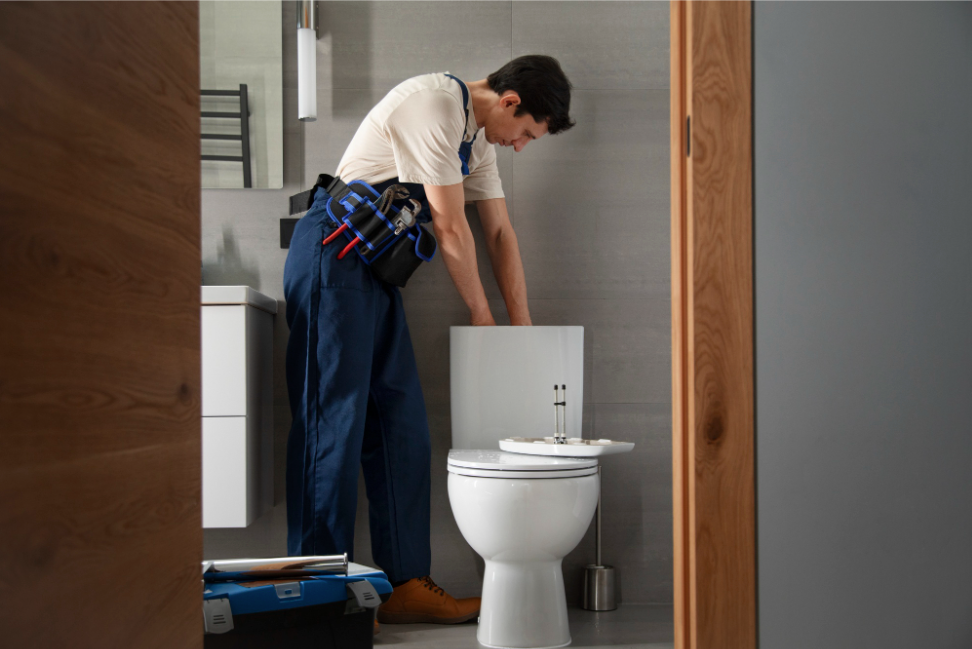
You turn the shower handle and get a burst of scalding water, then ice cold thirty seconds later. Or the sink drain gets a little slower every week until one morning it just stops. Bathroom plumbing in Kansas City, MO covers exactly this kind of thing, the small, specific failures that pile up in the room your household uses more than any other, and most of them trace back to a cause you'd never guess just from standing there annoyed.
What makes Kansas City bathrooms particular is what's often behind the wall. A lot of homes here, especially in the older neighborhoods, still run on galvanized steel supply lines from a build era when that was the standard choice. Those lines were never meant to last forever, and a lot of them are well past the point where "still working" means "working well."
That matters for more than just water pressure. It's part of why a bathroom repair in a 1920s bungalow can look completely different from the same complaint in a newer build out toward Overland Park or Lee's Summit.
In this article, you will learn about:
- Why your shower runs hot then freezing, and what's actually happening
- What galvanized pipe means for a Kansas City bathroom
- The remodel decisions that change your plumbing bill
- How to tell a real emergency from a wait-it-out problem
Keep reading to actually understand what's going on in your walls, not just what to Google next time it happens.
Why your shower runs hot then freezing, and what's actually happening
Temperature swings in the shower are one of the most reported bathroom complaints, and homeowners almost always assume it's the water heater. Sometimes it is. More often it's the valve.
A shower valve mixes hot and cold water to hold a steady temperature, and it does that job through a cartridge that wears out with age and use.
The cartridge is doing more work than you think
Inside a single-handle shower valve, a small cartridge controls the exact ratio of hot to cold water passing through. When that cartridge wears, cracks, or gets coated in mineral deposits, the mix becomes inconsistent, and that's the scald-then-freeze pattern people describe.
- Water temperature swings without you touching the handle
- The handle feels gritty, stiff, or catches at certain points
- A faint drip continues even with the handle fully off
- Pressure drops noticeably compared to other fixtures in the house
A cartridge swap is usually a same-visit fix and doesn't require opening the wall, since most valve bodies are accessible from the shower side alone. The technician removes the trim plate, pulls the old cartridge, and drops in a replacement matched to the specific valve brand and model.
Brand matters more here than people expect. Moen, Delta, Kohler, and other manufacturers use different cartridge designs, and a universal fix doesn't exist the way it does for some other plumbing parts. Knowing the valve brand ahead of a service call, if it's visible on the trim, can sometimes speed up the visit since the plumber can bring the right part the first time.
Why it happens faster here than in a lot of other cities
Cartridges fail from wear, but mineral buildup speeds that failure up considerably, and Kansas City's water carries enough dissolved calcium and magnesium that scale accumulates steadily inside valve bodies over a few years. A cartridge that might last a decade in genuinely soft water can start acting up in half that time here.
This isn't unique to showers. The same mineral buildup shows up as hard water staining on fixtures, reduced flow at faucets, and shortened lifespans across most of a home's plumbing.
Households that already deal with visible mineral spots on shower glass, chalky buildup around faucet aerators, or a water heater that's needed more frequent flushing are seeing the same underlying cause show up in different places. A shower valve going bad faster than expected is rarely an isolated event once you notice the pattern elsewhere in the house.
When it's not the valve at all
If every fixture in the house, not just the shower, swings in temperature or loses pressure at the same time, the problem is likely upstream: the water heater, the main supply line, or even a neighbor's high-demand usage on a shared line during peak hours. Isolating whether the problem is one fixture or the whole house is the fastest way to narrow down the actual cause before calling anyone.
- Test hot water at a second fixture while the shower is off
- Note whether the issue happens at a specific time of day
- Check whether pressure, not just temperature, is affected elsewhere
- Rule out a recently run dishwasher or washing machine as the cause
- Call for diagnosis if the pattern points beyond a single valve
That quick check alone often tells a plumber exactly where to start before they've even walked in the door. A whole-house pattern that only shows up during morning peak hours, for instance, points toward a water heater struggling to keep up with simultaneous demand rather than a single failed part.
A pattern tied to time of day is also worth mentioning specifically when you call, since it can rule out a fixture-level problem almost immediately and point a technician straight at supply capacity or the water heater's recovery rate instead.
What galvanized pipe means for a Kansas City bathroom
This is the part of bathroom plumbing that's genuinely specific to this city, and it's worth understanding even if your bathroom seems fine right now.
Kansas City's water utility has been working through an inventory of exactly what kind of pipe runs into every home in the city, and the results say a lot about what's actually buried under a lot of local lawns.
The city just counted its own pipes, and the numbers are worth knowing
KC Water's own inventory found that of the city's roughly 178,000 water service lines, 22,951 are galvanized steel and classified by the Environmental Protection Agency as requiring eventual replacement, since galvanized pipe downstream of an old lead connection can leach lead into the water. According to reporting from the Missouri Independent, replacing those lines is projected to cost the city more than $450 million, running between $12,500 and $20,000 per line, with property owners responsible for the portion running from the street to the house.
That's not a hypothetical problem for older neighborhoods. It's a documented one, with a dollar figure attached and inspectors already checking pipe by pipe across the city's oldest neighborhoods.
The inventory itself came from searching public records like old building permits, which is how the city sorted most lines into lead, non-lead, or unknown categories without physically digging up every street. Nearly 25,000 lines still fall into that unknown category, meaning the true galvanized count could shift as inspections continue this spring in the first pilot neighborhoods.
What this actually means for your bathroom
A galvanized line doesn't just risk water quality, it also narrows internally as scale and corrosion build up over decades, which is exactly why older Kansas City bathrooms often report weak shower pressure that a cartridge swap alone won't fix. If your home predates the 1960s and you've never had the supply line checked, that's worth doing before assuming every bathroom complaint is fixture-specific.
There's a simple test you can do yourself before ever calling anyone. If a magnet sticks to an exposed section of your water line, it's very likely galvanized steel; copper, plastic, and lead will not hold a magnet. A second, quicker check works too: gently scratch an exposed section with a coin the way you'd scratch a lottery ticket. Copper reveals a bright, coppery color underneath. Galvanized stays dull gray no matter how hard you scratch, and lead turns up a soft, shiny silver.
Neither test tells you what's happening inside the wall, where most of a bathroom's actual supply piping runs. It only tells you what material you're dealing with at the point you can see it, which is still useful information heading into any conversation with a plumber.
What to do if you find out you have it
Finding galvanized pipe doesn't mean an immediate emergency, and a slow, planned replacement is almost always the better financial move than waiting for a failure to force the issue. A residential plumbing inspection can confirm what material is actually running to your home and whether any sections show the kind of internal corrosion that shortens the timeline.
Bathrooms fed by galvanized supply are also more prone to sediment showing up in the water after any nearby city water main work, since disturbing an old line can knock loose decades of buildup. Knowing you have galvanized pipe ahead of time turns a confusing, alarming moment into an expected one with a known cause.
Replacing a galvanized service line is typically done with copper or PEX, and the work usually happens without tearing up the entire yard, using a trench along the existing line's path rather than a full excavation. Timing it around a bathroom remodel that's already opening up walls can also cut down on redundant labor, since some of the interior work overlaps either way.
The remodel decisions that change your plumbing bill
A bathroom remodel is where plumbing choices stop being about fixing something broken and start being about what the room will actually cost to build the way you want it, whether that's a downtown loft or a larger home out in Leawood or Prairie Village.
The single biggest cost driver isn't the fixtures themselves. It's whether anything is moving.
Keeping the footprint versus moving the shower
A toilet, sink, or shower that stays exactly where it already sits keeps the existing supply and drain lines in place, which is by far the cheapest path through a remodel. Move any of those fixtures even a few feet, and the project now involves extending or rerouting lines, often through a wall or floor that would otherwise stay closed.
This is the single question worth settling first in any remodel conversation, before tile samples or fixture catalogs even come out, because it changes the scope of everything that follows. A plumber can typically tell within one visit whether your current layout allows for a straightforward keep-in-place remodel or whether moving fixtures is genuinely necessary to fit what you actually want.
Homeowners sometimes assume moving a shower or relocating a vanity is purely a design decision. In an older Kansas City home, it's just as often a plumbing decision first, since the existing supply and drain routing may only make one or two layouts realistic without significant extra cost.
The basement bathroom problem nobody warns you about
Adding a bathroom below the level of the main sewer line, a common ask for basement remodels, means gravity can't move waste out on its own. That bathroom needs a sump pump or a dedicated sewage ejector system, which grinds and pumps wastewater up to the main line.
This isn't optional or a nice-to-have. Skip it, or size it wrong, and the new bathroom simply won't drain correctly, something that only becomes obvious after tile and drywall are already in.
Sizing matters more than most homeowners expect going in. A pump rated for a single toilet won't keep up once you add a shower and sink to the same basement bathroom, and undersizing shows up as slow drainage, backups, or a pump that runs constantly and burns out early. Getting the load calculation right at the planning stage, before concrete gets poured or a pit gets dug, avoids a costly redo later.
Venting: the part that's invisible until it's a problem
Every drain needs a vent to let air in behind the water as it flows out, and without one, drains gurgle, run slow, or siphon water out of trap seals entirely, letting sewer gas into the room. This is the single most commonly overlooked detail in remodels done without a licensed plumber involved in the planning stage, not just the installation.
Once walls are closed, a venting mistake means opening them back up to fix. Getting this right before drywall goes up saves real money and a real headache later. Hero's Club members get that planning built into any remodel project from the first conversation.
Older Kansas City homes sometimes have vent systems that were adequate decades ago but don't meet current code for a remodeled bathroom, especially if the project adds a fixture or relocates the toilet. A plumber checking vent sizing and routing before the walls close is a five-minute conversation. Discovering it's wrong after the fact is a much longer and more expensive one.
How to tell a real emergency from a wait-it-out problem
Not every bathroom issue needs a same-day call, and knowing the difference saves money without risking real damage.
The line usually comes down to whether water is actively escaping somewhere it shouldn't be, or whether something is simply not working as well as it used to.
Signs it can wait for a scheduled appointment
A slow drain, a minor valve drip, a toilet that occasionally runs longer than it should, none of these need an emergency call. They're worth fixing soon, since they waste water and tend to worsen gradually, but they're not actively damaging your home in the meantime.
A running toilet is a good example of how this plays out. It can waste a meaningful amount of water every single day it's left alone, which shows up as a higher bill weeks later, but it isn't putting your subfloor or ceiling at risk the way an active leak would. The same goes for a shower valve that's just started dripping, or a drain that's slower than it used to be but still moving.
The general test is simple: if nothing is actively escaping the pipe or fixture right now, it can almost always wait for the next available appointment rather than an after-hours or same-day dispatch.
Signs that mean stop and call now
Active water on the floor, a toilet leaking at its base, or a supply line that's clearly failing is a different category entirely. It's exactly what leak detection work is meant to catch before water finds its way into a subfloor or through a ceiling below, since that kind of damage compounds by the hour, not the week.
- Standing water on the bathroom floor with no clear source
- A wax ring failure allowing water under the toilet base
- A burst or actively spraying supply line
- Water stains appearing on a ceiling below the bathroom
Any one of these justifies shutting off the fixture's water at the valve and calling for emergency plumbing right away rather than waiting to see if it resolves on its own.
The middle case: when you're genuinely not sure
If you can't tell which category a problem falls into, the safest move is to shut off water to that specific fixture, not the whole house, and describe exactly what you're seeing when you call. A plumbing repair technician can usually tell over the phone whether it's worth an immediate visit or can safely wait for a scheduled slot, based on a few specific details about what's happening and how fast.
Have a few things ready before you call: whether water is actively moving or just standing, how long it's been happening, and whether it's isolated to one fixture or spreading. Those three answers alone usually settle the question faster than trying to describe the whole situation from scratch.
When genuinely unsure, erring toward caution costs little. Shutting off a single fixture's valve takes seconds and causes no harm even if the problem turns out to be minor, while leaving an unclear leak running until a scheduled visit can turn a small problem into a much bigger one.
Conclusion
Bathroom plumbing in Kansas City isn't quite the same problem it is everywhere else, given how much of the city's older housing stock still runs on galvanized supply lines the utility itself is now working through inventory by inventory. Understanding what's actually behind your wall, not just what symptom you're seeing, changes how you plan for repairs, remodels, and the occasional real emergency.
Whether it's a valve that's finally worn out, a remodel that needs the right plumbing plan from day one, or genuine uncertainty about what's running through your walls, getting a straight answer from someone who works on Kansas City bathrooms regularly beats guessing.
Benjamin Franklin Plumbing® of Kansas City is ready to help with bathroom plumbing repair, remodel support, and installation, backed by a 100% satisfaction guarantee and technicians who know exactly what a Kansas City bathroom is up against.

 Your Privacy Choices