
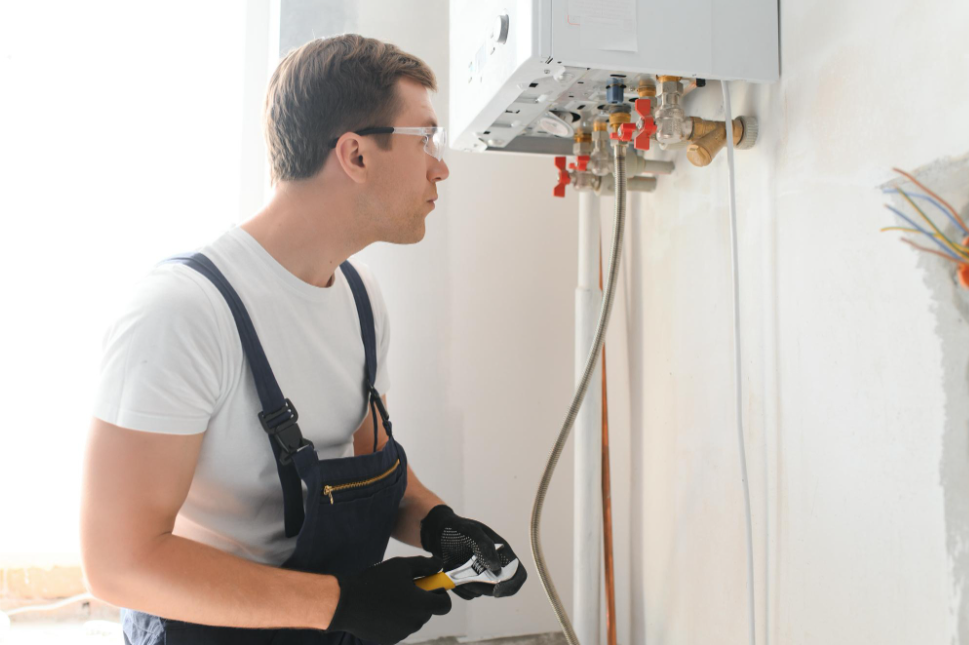
A water heater does not quit without warning. It sends signals for weeks or months before the final failure, and homeowners in Woodloch who know what those signals look like can schedule a maintenance visit instead of waking up to a cold shower or a flooded garage.
Recognizing the signs your water heater needs maintenance in Woodloch early protects the unit, your home, and your wallet from the kind of damage that comes from waiting too long.
Woodloch is a small, wooded community of roughly 186 residents in south-central Montgomery County, incorporated in 1974. Most of the homes here date from the mid-1970s through the 1990s, and many still have original or aging plumbing systems that have been processing hard Gulf Coast Aquifer water for decades.
That combination of older infrastructure and mineral-rich water makes water heaters in this area more prone to the kind of wear that shows up as the warning signs covered in this article.
The National Fire Protection Association reports that U.S. fire departments responded to an estimated average of 37,365 fires involving heating equipment per year from 2020 to 2024, resulting in 417 civilian deaths, 1,260 injuries, and $1.2 billion in property damages annually.
Water heaters are part of that equipment category, and a neglected unit with a faulty thermostat, a seized relief valve, or corroded gas connections contributes to that risk. Routine maintenance eliminates these hazards before they become dangerous.
In this article, you will learn about:
- Strange sounds that tell you something is wrong inside the tank
- Water quality changes that point to internal corrosion
- Temperature problems that signal failing components
- Physical signs around the unit you should never ignore
- How Woodloch's local conditions speed up wear
- What to do when you spot these warning signs
Keep reading to learn how to catch water heater problems early and avoid the emergency call that always seems to come at the worst possible time.
Strange sounds that tell you something is wrong inside the tank
A water heater in good condition runs quietly. You might hear the burner ignite on a gas model or a faint hum from an electric element, but beyond that, the unit should be nearly silent. When new sounds appear, they are almost always telling you that something has changed inside the tank and that maintenance is overdue.
The sounds themselves are diagnostic. Different noises point to different problems, and knowing what each one means helps you communicate more precisely with a plumber when you call. Common water heater sounds and their likely causes include:
- Popping or rumbling: hardened sediment trapping water pockets against the heated tank floor
- High-pitched whining: a restricted valve, a scaled heating element, or a partially closed inlet
- Banging or hammering: pressure surges in the supply line, often from high water pressure or a failing expansion tank
- Sizzling or hissing: water dripping onto the burner assembly from a slow internal leak
Each of these sounds points to a specific problem, and addressing it promptly prevents the issue from spreading to other components.
Popping, rumbling, and knocking
These are the most common water heater noises, and they all trace back to the same cause: sediment buildup on the bottom of the tank. When a thick layer of mineral deposits sits between the burner and the water, pockets of water get trapped beneath the sediment. As the burner heats the tank floor, those pockets boil, and the steam forces its way up through the hardened layer, creating the popping and rumbling sounds.
The noise may be faint at first, barely audible from outside the utility closet or garage. Over time, as the sediment layer thickens and hardens, the sounds grow louder and more frequent. By the time the rumbling is easy to hear from another room, the sediment has been compacting for months or even years, and a standard drain and flush may not clear it without professional help.
In Woodloch homes, where the Gulf Coast Aquifer delivers mineral-laden water through aging pipes, sediment accumulates faster than in areas with softer water. A tank that has never been flushed in a home built in the 1970s or 1980s may have an inch or more of hardened deposits on the bottom, and those sounds are the first real warning that the unit is working against itself.
Ignoring the noise does not make the problem go away. The sediment continues to insulate the tank bottom, forcing the burner or element to run longer and hotter, which accelerates wear on every other component. Scheduling a flush at the first sign of rumbling prevents the damage from compounding. For homeowners in this part of Montgomery County, summer water heater maintenance before the high-demand season makes even more sense.
High-pitched whining or screeching
A high-pitched sound during heating cycles usually indicates a problem with the inlet or outlet valves rather than with sediment. When a valve is partially closed or a fitting has developed a mineral restriction, water forces through the narrow opening at higher velocity, creating a whistling or whining noise.
Check the cold water inlet valve at the top of the tank and confirm it is fully open. If the noise persists, the restriction may be inside the valve body or in the pipe connection itself, both of which require a plumber to diagnose and clear.
On electric models, a whining sound can also come from a heating element that has developed scale buildup on its surface. The element vibrates as it heats through the mineral coating, producing a sound that intensifies as the scale thickens. Descaling or replacing the element resolves the noise and restores efficient operation.
Banging or water hammer
A loud bang when the water heater starts or stops a heating cycle is different from the rumbling caused by sediment. This sound, known as water hammer, happens when water pressure changes abruptly and the pressure wave reverberates through the pipes.
Water hammer in Woodloch homes often points to high water pressure in the supply line, a failing expansion tank, or loose pipe straps that allow the pipes to move when the pressure shifts. While the water heater triggers the sound, the root cause is usually in the broader plumbing system rather than the tank itself.
A plumber can test the incoming water pressure and install or adjust a pressure-reducing valve if the reading exceeds the recommended 60 to 80 psi range. Left uncorrected, water hammer stresses pipe joints and fittings throughout the home and can eventually cause leaks at the weakest connection.
Water quality changes that point to internal corrosion
The water coming out of your hot water taps tells you a lot about what is happening inside the tank. Changes in color, odor, or taste that affect only the hot water side of the system almost always originate from the water heater rather than the municipal supply.
These changes develop gradually, which makes them easy to miss if you are not paying attention. Watch for any combination of the following when running only the hot water side:
- Brown, orange, or rust-colored water that clears after a few seconds or persists through the entire draw
- A rotten egg or sulfur odor that is present in hot water but absent from cold
- Visible grit, sand-like particles, or flakes in the water stream
- A metallic taste that appears only in hot water
Catching them early is one of the best ways to extend the life of the tank and avoid a sudden failure.
Rusty or brown hot water
If the hot water runs brown or rust-colored but the cold water is clear, the discoloration is coming from inside the water heater. This means one of two things: either the anode rod is doing its job and sacrificing itself to prevent tank corrosion, which produces rust-colored byproducts, or the anode rod is already depleted and the tank walls themselves are corroding.
A plumber can tell the difference by inspecting the anode rod. If the rod still has material on it, replacing it will clear up the discoloration and extend the tank's life. If the rod is completely consumed and the water still runs brown, the tank lining has likely failed, and replacement is the safer path forward.
In Woodloch, the local water already carries dissolved minerals from the Gulf Coast Aquifer, so homeowners should watch for changes in color rather than expecting perfectly clear water at all times. A shift from slightly tinted to visibly brown is the signal that something inside the tank needs attention.
Rotten egg or sulfur smell
A sulfur odor in the hot water, often described as a rotten egg smell, is caused by hydrogen sulfide gas produced by bacteria that thrive in warm, stagnant water. These sulfate-reducing bacteria colonize the anode rod and the sediment layer at the bottom of the tank, especially in homes where the water heater sits at lower temperatures or goes unused for extended periods.
The fix depends on the severity. A flush combined with raising the thermostat temporarily to 140 degrees for a few hours, and then lowering it back to the recommended 120 degrees, often kills the bacteria and resolves the odor. If the smell returns, the anode rod itself may be the problem. Switching from a standard magnesium rod to a powered or zinc-aluminum rod eliminates the chemical reaction that feeds the bacteria.
Homes in Woodloch that use well water instead of municipal supply are especially susceptible to this issue because well water often contains higher sulfate concentrations that feed bacterial growth.
Gritty or sandy particles in the water
Visible particles in the hot water stream mean sediment from the tank floor is being stirred up and pulled into the hot water outlet. This happens when the sediment layer reaches the level of the dip tube intake or when the dip tube itself has cracked and is drawing water from the wrong zone inside the tank.
Running the hot water into a clear glass and holding it up to the light reveals particles that are not visible under the faucet stream. If you see sand-like grains or flakes, the tank needs a flush at minimum, and the dip tube should be inspected for cracks or deterioration.
Gritty water is also hard on fixtures downstream. The particles wear down faucet cartridges, clog aerators, and accelerate valve wear throughout the house. Addressing the source at the water heater protects every fixture the hot water touches.
Temperature problems that signal failing components
Inconsistent hot water is one of the clearest signs that a water heater component is failing. When the unit cannot maintain a steady temperature or runs out of hot water faster than it used to, something mechanical or electrical has changed inside the system.
These problems get worse over time, not better. A component that is struggling today will fail completely within weeks or months, and catching it during a maintenance visit prevents the full breakdown.
Running out of hot water faster than usual
If the household has not changed its water use habits but showers are running cold sooner, the water heater is losing usable capacity. The most common cause is sediment taking up space at the bottom of the tank. A 50-gallon tank with two inches of compacted sediment on the bottom is effectively a 40-gallon tank, and the reduction shows up during peak demand.
The second common cause is a failing lower heating element on an electric water heater. Electric models use two elements, one upper and one lower. When the lower element fails, the tank only heats the top portion of the water, and the hot water supply drops significantly even though the upper element is still working.
A plumbing diagnosis can determine whether the issue is sediment, a failing element, or a combination of both. In either case, the repair is far less expensive than waiting for a full system failure.
Temperature swings during use
When the water temperature fluctuates between hot and cold during a single shower or changes noticeably from one day to the next, the thermostat or a heating element is not maintaining consistent control.
On gas models, a thermostat that drifts from its calibration sends inconsistent signals to the burner, causing it to cycle erratically. On electric models, a failing thermostat may allow the element to overheat or underheat in unpredictable patterns.
A cracked or broken dip tube is another frequent culprit. The dip tube directs incoming cold water to the bottom of the tank, where it heats before rising to the top. If the tube cracks, cold water enters the hot water zone near the outlet, creating the temperature fluctuations that homeowners notice during showers and at the kitchen sink.
Hot water that never gets fully hot
When the water reaches lukewarm but never gets truly hot, the thermostat setting may have been accidentally lowered, or the thermostat itself has failed. Before assuming the worst, check the thermostat dial and confirm it is set to 120 degrees Fahrenheit.
If the setting is correct and the water still does not reach temperature, the heating element or burner assembly is the likely issue. On gas models, a dirty or misaligned burner reduces heat output. On electric models, a shorted element heats partially but cannot reach the target temperature.
According to the U.S. Fire Administration, rooms containing heating equipment or water heaters account for 11% of the areas where nonconfined residential heating fires originate. A gas water heater with a malfunctioning burner not only fails to deliver hot water but also introduces combustion efficiency problems that can produce excess carbon monoxide. Professional inspection is the right response when a gas unit stops heating properly.
Physical signs around the unit you should never ignore
Some of the most important warning signs are not things you hear or feel in the water. They are things you see when you look at the water heater itself. A quick visual check of the unit and the surrounding area once a month catches problems that would otherwise go unnoticed until they cause damage.
These visual checks take less than two minutes and require no tools. Walk through this sequence once a month:
- Look at the base of the tank and the floor beneath it for any moisture, drips, or staining.
- Check the T&P valve discharge pipe for dripping or mineral buildup around the opening.
- Scan the supply line connections and gas fittings for visible rust, green corrosion, or white mineral deposits.
- Look at the tank shell for rust spots, bulging, or discoloration, especially near the bottom seam.
- Listen briefly while the unit is actively heating for any new or louder sounds.
Any change from the previous month is worth noting, and persistent changes warrant a professional visit.
Moisture or puddles at the base
Any moisture around the bottom of the water heater requires immediate investigation. A small puddle could be condensation, a dripping T&P valve, or a weeping connection. A larger or persistent puddle usually means the tank itself is leaking.
Start by checking the drain valve at the bottom of the tank. If it is dripping, it may simply need tightening or a new washer. Check the T&P valve discharge pipe next. If water is dripping from the pipe, the valve is cycling, which means internal pressure or temperature has exceeded safe limits, and that is a maintenance issue that needs professional attention.
If neither the drain valve nor the T&P valve is the source, the leak may be coming from the tank body itself. A leak at the base of the tank means the internal lining has failed, and the steel shell is corroding through. At that point, the only safe option is replacement.
In Woodloch, where many water heaters sit in garages adjacent to living spaces, even a slow leak can cause moisture damage to drywall, flooring, and stored belongings before the homeowner notices. Monthly visual checks prevent that kind of surprise. Including the water heater in a broader seasonal leak prevention routine covers the rest of the plumbing at the same time.
Rust or corrosion on exterior fittings
Visible rust on the tank shell, supply line connections, or gas line fittings is a sign that moisture is reaching metal components. In Woodloch's humid environment, located near the West Fork of the San Jacinto River, exterior corrosion develops faster than in drier climates.
Rust on a supply line fitting does not necessarily mean the tank is failing, but it does mean the connection is weakening. A corroded fitting that gives way under pressure sends water, or in the case of a gas line, natural gas, into the surrounding space. Catching corrosion during a plumbing inspection and replacing the affected fitting is a minor repair that prevents a serious incident.
Rust on the tank body, especially near the bottom seam, is more concerning. It suggests that the internal protective coating has failed in that area and the steel is corroding from both the inside and the outside simultaneously.
An aging or expired unit
A water heater does not have an expiration date printed on the front, but you can determine its age from the serial number on the manufacturer's label. Most manufacturers encode the production date in the first few digits of the serial number, typically as a letter-month and two-digit-year code.
A tank water heater that is approaching 10 years old warrants increased attention, even if it appears to be functioning normally. The risk of a sudden leak or failure increases with every year past the decade mark. Homeowners with units older than 12 years should seriously consider proactive replacement rather than waiting for a failure that can cause water damage and leave the household without hot water.
According to the U.S. Department of Energy, the average household spends between $400 and $600 per year on water heating. An aging unit that has lost efficiency to sediment, worn components, and corroded internals pushes that cost higher every month. Replacing the unit before it fails gives you control over the timing, the model selection, and the installation schedule, instead of making those decisions in an emergency. Whether you choose a conventional tank or a tankless water heater, planning the replacement on your terms means better pricing and less disruption.
How Woodloch's local conditions speed up wear
Woodloch is not a generic suburb. Its specific geography, water source, and housing stock create conditions that accelerate water heater wear in ways that homeowners who moved from other areas may not expect.
Understanding these local factors helps explain why a water heater in Woodloch may need maintenance more frequently than the same unit installed in a different part of the state.
Hard water from the Gulf Coast Aquifer
Montgomery County's water supply comes from the Gulf Coast Aquifer, a layered system of sand, clay, and limestone that naturally dissolves calcium and magnesium into the water. These minerals are the primary ingredients of the sediment that settles inside water heater tanks.
For Woodloch homeowners, this means every gallon of hot water that cycles through the tank deposits a small amount of mineral material on the tank floor, the heating elements, and the anode rod. Over months and years, that accumulation creates the insulating layer that causes efficiency loss, overheating, and the popping sounds described earlier.
Homes on well water, which are not uncommon in the rural sections around Woodloch, typically face even higher mineral concentrations because the water bypasses municipal treatment entirely.
Humidity and proximity to waterways
Woodloch sits along the West Fork of the San Jacinto River, and the surrounding wooded terrain holds moisture at levels that are consistently high, especially during the warmer months. That ambient humidity accelerates exterior corrosion on water heater tanks, gas connections, and supply fittings.
A water heater in a vented garage or an unconditioned utility room in Woodloch is exposed to moisture that a unit in a sealed, climate-controlled space does not encounter. The exterior metal components, including the gas valve, thermocouple, and pilot assembly on gas models, degrade faster in humid environments. Annual inspection catches the early stages of corrosion and prevents it from reaching a point where connections fail.
Older homes with aging infrastructure
Most homes in Woodloch were built between the mid-1970s and the 1990s. Plumbing systems from that era commonly use galvanized steel or early-generation copper supply lines, and the original water heater connections may still be in place even if the tank has been replaced.
Older supply lines corrode internally, releasing particles that end up inside the water heater and mix with the sediment layer. Corroded pipe joints can leak slowly, adding moisture to the area around the tank and accelerating exterior corrosion. A thorough maintenance visit evaluates not just the water heater but the water lines and connections feeding it.
Upgrading corroded supply connections during a water heater service call is a small additional investment that protects both the new connections and the tank from the problems the old fittings were causing.
What to do when you spot these warning signs
Recognizing a warning sign is the first step. Knowing what to do next determines whether the problem stays small or grows into a full failure.
Not every sign requires an emergency call, but none of them should be ignored. The right response depends on the severity of the symptom and the age of the unit.
Signs you can monitor for a few days
Some symptoms warrant attention but do not require an immediate service call. If the hot water supply has decreased slightly but has not disappeared entirely, if you hear faint popping during heating cycles, or if the water runs slightly discolored for the first few seconds and then clears, you can note the pattern and schedule a maintenance visit within the next week or two.
During that monitoring period, check the area around the water heater daily for moisture. If any moisture appears, move the timeline up.
These early-stage symptoms almost always point to sediment accumulation or an anode rod that is approaching the end of its life. A professional flush and anode rod inspection typically resolve all of them in a single visit. Pairing this with a plumbing membership ensures the next visit is already on the calendar.
Signs that need prompt professional attention
More urgent symptoms include persistent discoloration that does not clear after running the water, a sulfur odor that returns after cleaning, temperature swings that make showers unpredictable, or loud banging and screeching sounds during operation. These indicate component-level problems that will not resolve on their own and will get worse with continued use.
Schedule a service visit within a few days. A plumber can diagnose the specific component that is failing, whether it is the thermostat, an element, the dip tube, or the anode rod, and repair it before the failure spreads to other parts of the system.
At this stage, the unit is still repairable in most cases. Prompt attention keeps the repair cost low and extends the tank's remaining useful life.
Signs that require same-day service
A few warning signs call for immediate action:
- A visible leak from the tank body, not from a valve or fitting, means the internal lining has failed. Turn off the power supply (gas valve or breaker) and the cold water inlet valve, and call for emergency plumbing service.
- A strong gas smell near a gas water heater means a potential gas leak. Leave the area, do not operate light switches or appliances, and call the gas utility emergency line first, then a plumber.
- Water pooling above the ceiling in a home with an attic-mounted water heater indicates a rupture or a major connection failure. Turn off the supply and the power immediately to limit the damage.
These are the scenarios that routine maintenance prevents. A tank that is inspected annually and flushed on schedule is far less likely to reach any of these critical failure points. Homeowners across Montgomery County, from Woodloch to Conroe to The Woodlands, benefit from the same preventive approach.
A complete maintenance program that includes the water heater alongside the rest of your home's plumbing, from drain cleaning to sewer line inspection to outdoor plumbing checks, keeps every system in your Woodloch home protected year-round.
Conclusion
Your water heater communicates through sounds, water quality changes, temperature shifts, and visible physical signs. Every one of those signals is a chance to schedule a maintenance visit instead of dealing with a breakdown, and every ignored signal moves the unit one step closer to a failure that is more expensive and more disruptive than the repair would have been.
In Woodloch, where hard water, high humidity, and aging home infrastructure put extra demands on the system, those signals tend to appear earlier and escalate faster than in newer communities with softer water. Staying ahead of the wear with annual maintenance, monthly visual checks, and prompt response to new symptoms is the most reliable way to protect the investment and keep hot water flowing to every fixture in your home.
When you spot a warning sign, or when it has been more than a year since anyone inspected the unit, Benjamin Franklin Plumbing serves Woodloch and the surrounding Montgomery County communities with on-time arrival, upfront pricing, and the kind of thorough diagnostic work that finds the real problem the first time. Call (936) 283-6808 to schedule your water heater maintenance.

 Your Privacy Choices