Summer in Woodloch puts outdoor plumbing through months of relentless stress. Between the heat, the humidity, the clay soil, and the spike in water demand from irrigation systems, hose bibs, and pools, the fixtures and lines outside your home absorb more punishment from May through September than they do the rest of the year combined. Outdoor plumbing issues in Woodloch tend to surface right when you need water the most, and the damage they cause compounds quickly in the kind of heat and moisture this part of Montgomery County delivers.
Woodloch is a small, tree-lined community where most homes sit on quarter-acre lots or larger, many built in the 1970s when the neighborhood was first established. That vintage means the original plumbing on some properties has been in the ground for over 50 years, running through soil that expands, contracts, and shifts with every wet and dry cycle.
According to the EPA, outdoor water use accounts for more than 30% of total household consumption nationwide, and in hotter climates that share can climb well above 50%. For Woodloch homeowners, that volume of outdoor use puts sustained seasonal pressure on every connection, valve, and buried line on the property.
The problems covered in this article are not hypothetical. They are the issues plumbers in the Conroe and Montgomery County area see repeatedly every summer, and they all start small enough to fix before they escalate. Knowing what to watch for and when to act is the difference between a routine repair and a costly emergency.
In this article, you will learn about:
- How Woodloch's soil and climate create the perfect conditions for outdoor plumbing failures
- Irrigation and sprinkler system leaks that waste water and damage foundations
- Hose bib and spigot problems that get worse with heavy summer use
- Sewer line stress from heat, roots, and shifting ground
- Outdoor drain backups and how summer storms overwhelm aging systems
Keep reading to protect your property from the outdoor plumbing problems that catch Woodloch homeowners off guard every summer.
How Woodloch's soil and climate create the perfect conditions for outdoor plumbing failures
Outdoor plumbing does not fail in a vacuum. The conditions around the pipes matter as much as the pipes themselves, and Woodloch's specific combination of soil, heat, and moisture creates an environment that accelerates wear on every outdoor fixture and buried line. Understanding why this area is harder on plumbing than most helps homeowners prioritize the right inspections at the right time.
The climate and ground conditions in Montgomery County do not take a break in summer. They intensify, and the plumbing buried in and running through that ground feels every degree and every inch of soil movement.
Expansive clay soil and what it does to buried pipes
Woodloch sits on clay-heavy soil typical of the greater Montgomery County region. Clay soil absorbs water and swells when it rains, then dries out and contracts during the long stretches of heat between storms. That cycle of expansion and contraction puts lateral and vertical pressure on every pipe buried in or running through the ground.
Sewer lines, water supply lines, and irrigation pipes all move with the soil. When the ground swells unevenly, one section of pipe may shift upward while the section next to it stays put or drops. That differential movement creates stress at joints, bends, and connection points. Over time, it loosens fittings, cracks rigid materials like clay and cast iron, and creates low spots in drain lines where debris collects and blockages form.
The damage is cumulative. A pipe that survived 10 summers of soil movement may fail on the 11th, not because anything changed above ground, but because the repeated stress finally exceeded what the material could absorb. Homeowners who notice changes in drainage speed, soft spots in the yard, or unexplained water pressure fluctuations should consider whether soil-related pipe stress is contributing.
Summer heat and what it means for exposed fixtures
Woodloch summers regularly push past 95 degrees, and direct sunlight on south- and west-facing walls can raise surface temperatures well above ambient. Outdoor faucets, hose bibs, exposed supply lines, and sprinkler valve boxes all sit in that heat for hours every day.
Sustained high temperatures accelerate the breakdown of rubber washers, O-rings, and gaskets inside valves. UV exposure degrades plastic components and makes PVC fittings brittle over time. The thermal cycling between daytime highs and overnight lows, even when both are warm, causes expansion and contraction in metal and plastic connections that gradually loosens threads and seals.
These effects are slow but consistent. A fixture that worked fine in April may start dripping in July, not because of a single event but because months of heat and use pushed a marginal seal past its limit.
High water demand and the pressure it puts on aging systems
Summer water use in Woodloch spikes significantly. Irrigation systems run daily or every other day. Hose bibs stay connected and under pressure for weeks at a time. Pools need filling and topping off. Pressure washers come out for decks and driveways. All of that demand runs through the same supply lines and fixtures that handle minimal outdoor load during cooler months.
According to the EPA, up to 50% of the water used outdoors is lost to wind, evaporation, and runoff from inefficient irrigation. That waste still flows through the plumbing system, putting the same mechanical stress on valves and connections as water that reaches a garden bed. Older supply lines, corroded shut-off valves, and worn hose bib internals are all more likely to fail under sustained summer pressure than during the lighter demand of fall and winter.
Irrigation and sprinkler system leaks that waste water and damage foundations
Sprinkler and irrigation systems are the single largest source of outdoor water use on most Woodloch properties, and they are also the most likely to develop leaks that go unnoticed for weeks. A leak underground or behind a valve box does not leave a puddle on the driveway. It saturates the soil, inflates the water bill, and slowly undermines the foundation, all without an obvious visible clue.
Irrigation system leaks are a summer problem because the system runs every day. A line that holds fine under winter dormancy may fail when pressurized daily through months of heat. A poorly maintained irrigation system can waste up to 25,000 gallons per year according to the EPA, and a cracked supply line buried under the lawn can waste far more before anyone notices.
Cracked lateral lines and failed fittings
The PVC lateral lines that carry water from the main supply to each sprinkler zone run just below the surface, typically 6 to 12 inches deep. At that depth, they sit squarely in the zone of maximum soil movement. Every expansion and contraction cycle stresses the glued joints and fittings that connect straight runs to elbows, tees, and risers.
Summer heat also softens PVC, making it more flexible but less resistant to the sideways pressure that shifting soil applies. Cracks tend to appear at fittings first, because those are the points where the pipe changes direction and the stress concentrates. A fitting that has been weakening for two or three seasons may finally let go during the first sustained heat wave of summer.
Signs of a cracked lateral line include:
- A section of lawn that stays noticeably greener or wetter than the areas around it
- Water bubbling up around a sprinkler head during or after a run cycle
- A drop in pressure at the heads in one zone while the other zones run normally
- A soft, spongy area in the yard that does not dry out between waterings
Any of these patterns warrants a closer look. The leak may be small enough to fix with a coupling replacement, or it may involve a section of line that needs to be cut out and rerouted.
Keeping an eye on your yard line for unexpected wet spots is one of the simplest ways to catch an irrigation leak before it reaches the foundation.
Valve and backflow preventer failures
Every sprinkler zone is controlled by a solenoid valve, usually grouped in a valve box near the water supply connection. These valves open and close electrically dozens of times per week during summer, and the internal diaphragms and solenoids wear with each cycle.
A valve that does not close fully after a cycle allows water to trickle through the zone continuously, wasting water and saturating one section of the yard. A valve that does not open at all leaves a dead zone in the lawn, which most homeowners notice quickly, but the mechanical failure inside the valve box may also be causing a secondary leak at the fitting.
Backflow preventers, the devices that keep irrigation water from siphoning back into the household supply, also take a beating in summer. The internal check valves and relief valves see constant pressure cycling, and a failed backflow preventer is both a water waste issue and a contamination risk. Texas requires backflow prevention on irrigation systems connected to the municipal supply, and a failed device needs prompt replacement.
Foundation damage from irrigation that runs too close to the house
Many Woodloch homes have sprinkler heads positioned within a few feet of the foundation. When those heads are properly aimed and calibrated, they water the lawn without directing runoff toward the house. When they are misaligned, cracked, or leaking at the riser, they deposit water directly against the slab.
In clay soil, that concentrated moisture causes the soil adjacent to the foundation to swell while the soil farther away stays dry. The uneven swelling puts differential pressure on the slab, which can lead to cracks, settling, and the cascading interior symptoms that follow: sticking doors, cracked drywall, and uneven floors.
Checking sprinkler head alignment and inspecting the risers closest to the house at the start of every summer season takes 10 minutes and can prevent the kind of slab-related problems that cost thousands to correct.
Hose bib and spigot problems that get worse with heavy summer use
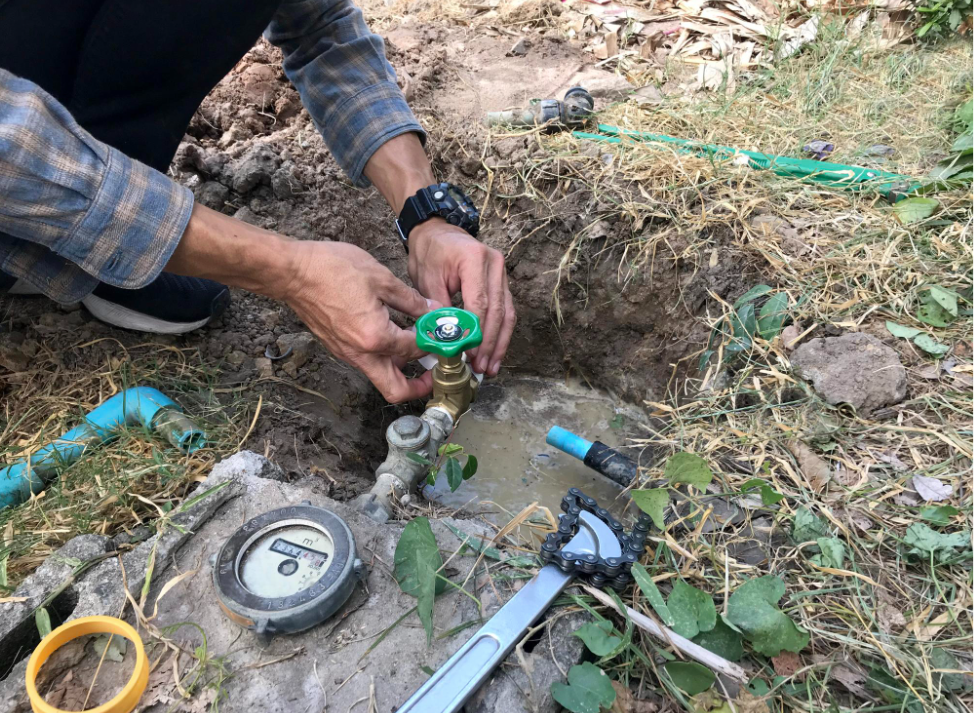
Outdoor faucets handle more use between May and September than they do in the entire rest of the year. Garden hoses stay connected for weeks, handles get cranked open and shut multiple times a day, and the fixtures sit in direct sun for hours. That combination of sustained pressure, mechanical wear, and heat exposure makes summer the season when hose bib failures show up.
Most of these problems start small. A drip at the handle, a weep around the wall plate, a fitting that takes a little extra force to seat. Catching them early keeps the repair simple. Letting them run through the summer invites water damage to the exterior wall, the framing behind it, and the foundation below.
Worn washers and packing nut leaks
The most common hose bib failure is a worn rubber washer at the base of the valve stem. When the washer degrades, the faucet drips even when the handle is fully closed. The drip may be slow at first, just enough to leave a wet ring on the concrete below the spigot, but it worsens as the washer continues to compress and harden in the heat.
A related problem is a packing nut leak, where water seeps around the handle stem when the faucet is turned on. The packing nut compresses a rubber or graphite seal around the stem, and that seal shrinks and hardens over time, especially in heat. Tightening the packing nut a quarter turn often stops the leak temporarily, but a hardened seal needs replacement.
Both repairs are straightforward for a homeowner comfortable with basic tools. The process involves shutting off the supply to the faucet, removing the handle and packing nut, and replacing the washer or packing material. Total cost is under five dollars, and the job takes about 15 minutes. When the drip persists after a washer replacement, the valve seat itself is likely corroded, and that repair is better handled by a professional who can resurface or replace the seat.
A slow drip from an outdoor faucet may not seem like a priority, but the EPA notes that about 10% of homes have leaks wasting 90 gallons or more per day. Even a modest drip deposits moisture against the foundation every hour of every day, and in Woodloch's humidity, that moisture feeds mold and wood rot faster than in drier climates.
Hose connection failures and burst risks
The threaded connection where a garden hose meets the spigot is a common failure point during summer. A cracked rubber washer inside the hose fitting allows water to spray from the connection whenever the faucet is on. A cross-threaded hose that was forced onto the spigot can strip the threads on the hose bib itself, creating a leak that no amount of tightening will fix.
The bigger risk comes from leaving a hose attached and pressurized for days or weeks at a time. The faucet valve, the hose connection, and every fitting along the hose stay under constant municipal water pressure, typically 40 to 80 psi in Montgomery County. A weak point anywhere in that chain can fail while the homeowner is at work, releasing water for hours before anyone notices.
Best practice during summer:
- Disconnect the hose after each use, or at minimum close the faucet fully when the hose is not actively running
- Replace the rubber hose washer at the start of every season
- Inspect the hose bib threads for corrosion or stripping before connecting a new hose
- Never leave a sprayer nozzle locked in the closed position on an attached hose, because the pressure backs up into the hose and faucet assembly
These habits add a few seconds to each use and dramatically reduce the chance of a pressurized failure during the hottest months of the year.
Anti-siphon valve issues and code compliance
Most outdoor faucets in Texas are required to have an anti-siphon device, either built into the hose bib or added externally. The anti-siphon valve prevents water from flowing backward through the hose and into the household supply, which can happen if municipal pressure drops while a hose is submerged in a pool, a bucket of chemicals, or standing water.
These devices include a small spring-loaded check valve and an air gap, both of which degrade with age and exposure. A failed anti-siphon valve may drip continuously from the top of the device, or it may fail silently, creating a cross-connection risk that compromises the drinking water in the house. The EPA has documented the public health risks associated with backflow through unprotected cross-connections, including contamination from pesticides, fertilizers, and bacteria in standing water.
If your hose bib's anti-siphon cap is cracked, corroded, or dripping from the vent hole, replacing it is a code and safety issue, not just a convenience repair. A licensed plumber can confirm whether the existing device meets current Texas plumbing code requirements and replace it if needed.
Sewer line stress from heat, roots, and shifting ground
Sewer lines are out of sight and out of mind until something goes wrong, and summer creates the conditions that push marginal lines past their limit. The combination of heat, aggressive root growth, high water table fluctuations, and soil movement makes summer the peak season for sewer line failures in Woodloch and the surrounding Montgomery County area.
A sewer line problem does not start on the day you notice a slow drain or a bad smell in the yard. It builds over months or years, and the summer environment accelerates every contributing factor simultaneously. Homeowners who schedule a camera inspection before the season starts get ahead of problems that are much harder and more expensive to address once they cause a backup.
Root intrusion accelerates in summer
Trees and large shrubs are most actively growing during summer, and their root systems expand aggressively in search of water. Sewer lines are a prime target because they carry a consistent supply of moisture and nutrients. Roots enter through hairline cracks, offset joints, and deteriorated seals, then expand inside the pipe until they partially or fully block the flow.
In Woodloch, where mature trees line most streets and fill most yards, root intrusion is one of the most common sewer line problems plumbers encounter. The older clay and cast iron pipes found in homes built in the 1970s and 1980s are especially vulnerable because their joints were sealed with materials that break down over decades of soil movement and moisture exposure.
Signs of root intrusion include:
- Drains that slow down gradually over weeks rather than clogging suddenly
- Gurgling sounds from toilets or floor drains when another fixture is running
- A section of the yard that stays greener or lusher than the surrounding lawn, directly over the sewer line path
- Recurring backups that clear temporarily with snaking but return within a few weeks
A sewer camera inspection confirms the location and severity of the intrusion and helps determine whether clearing the roots will hold or whether the pipe needs structural repair.
Soil movement and pipe bellies
The same expansive clay that stresses irrigation lines also affects sewer pipes, but the consequences are more severe. A sewer line that develops a low spot, called a belly, traps waste and water at the bottom of the sag. Over time, solids accumulate in the belly, narrowing the effective diameter of the pipe and causing increasingly frequent backups.
Bellies form when the soil beneath a section of pipe settles or shifts, allowing the pipe to drop. Summer intensifies this process because the extreme drying of clay soil between rain events causes significant contraction and settlement. A pipe that was properly graded at installation can lose its slope after years of soil cycling, and once the belly forms, it does not self-correct.
The only reliable way to identify a belly is with a camera inspection. From above ground, the symptoms, slow drainage, recurring backups, and standing water in a cleanout, overlap with several other issues. The camera shows exactly where the sag is and how severe it has become, which determines whether the line can be cleared and maintained or whether it needs to be excavated and regraded.
Homeowners dealing with recurring drain clogs that come back after every clearing should ask their plumber about a belly in the line. Repeated snaking treats the symptom but does not fix the structural cause.
Sewer gas and odor issues in extreme heat
High temperatures increase the rate at which organic material decomposes inside sewer lines, and that decomposition produces hydrogen sulfide and other gases that smell like rotten eggs. Normally, the water in P-traps and the venting system in your home keep those gases from entering living spaces. But summer heat can evaporate the water in seldom-used traps, and extreme temperatures can cause pressure imbalances in the vent stack.
Outdoor symptoms are often the first clue. A persistent sewage smell near a cleanout, a floor drain, or the area where the sewer line exits the house suggests either a dry trap, a cracked pipe, or a vent issue. Inside the house, the smell may appear near a guest bathroom that has not been used in weeks, a laundry drain, or a basement floor drain.
Running water through every drain in the house once a week during summer keeps the traps charged. If the odor persists after that, the issue is in the line or the vent, and a professional plumbing diagnosis is the next step.
Outdoor drain backups and how summer storms overwhelm aging systems
Montgomery County summers deliver intense thunderstorms that can drop several inches of rain in under an hour. That volume of water overwhelms gutters, yard drains, and area drains on properties where the drainage infrastructure is undersized, clogged, or improperly graded. Outdoor drain backups cause standing water against foundations, flooded landscaping, and in some cases, water intrusion into the home through window wells, garage doors, or below-grade entries.
Woodloch's flat terrain and clay soil compound the problem. Clay does not absorb water quickly, so runoff stays on the surface longer and accumulates in low spots. A properly functioning outdoor drain system moves that water away from the house and off the property before it reaches a level that threatens the structure.
Clogged yard drains and catch basins
Yard drains and catch basins collect surface water and route it to a discharge point, usually the street, a ditch, or a storm sewer. Over time, these drains accumulate leaves, mulch, soil, and root matter that narrows the opening and slows the flow. A drain that handled a normal rain event in spring may overflow during a summer downpour because the accumulated debris reduces its capacity by half or more.
The fix is straightforward: clean the grate and flush the line before storm season hits. A garden hose pushed into the drain opening with full pressure will tell you whether the discharge end is flowing. If it is not, the line is blocked and needs to be cleared, either with a snake or a pressure flush.
For properties where standing water near the foundation is a recurring problem, adding or upgrading yard drains is a relatively modest investment that prevents the much larger cost of seasonal water damage to the foundation and interior finishes. According to FEMA, just one inch of water inside a home can cause up to $25,000 in damage, and much of that cost stems from water that entered because exterior drainage could not keep up.
Downspout discharge and grading problems
Gutters and downspouts handle roof runoff, but where that water goes after it leaves the downspout matters as much as the gutter system itself. A downspout that discharges directly at the foundation concentrates water in one spot, and in clay soil, that concentrated moisture causes localized swelling that stresses the slab.
Downspout extensions should carry water at least four to six feet away from the foundation, onto a surface that slopes away from the house. In Woodloch, where lot grading varies and many properties have mature landscaping that has altered the original grade over decades, it is common to find downspouts discharging into planting beds, mulch piles, or low spots that trap water right next to the house.
A quick walk around the exterior during a rain event reveals exactly where the water goes. If it pools near the foundation, an extension, a splash block, or a buried drain line can redirect it. Checking this before the heaviest part of storm season prevents the kind of sustained foundation moisture that leads to slab concerns and interior damage.
Cleanout access and why it matters in an emergency
Every sewer system has one or more cleanout access points, typically a capped pipe protruding from the ground near the foundation or at the property line. In an emergency, a plumber uses the cleanout to access the sewer line, run a camera, or clear a blockage without entering the house.
Summer growth often buries cleanouts under mulch, ground cover, or overgrown landscaping. Homeowners who cannot locate their cleanout before an emergency force the plumber to spend time searching, which delays the fix and may require removing landscaping to find the access point.
Before summer, locate every cleanout on the property and make sure each one is accessible. Clear vegetation, pull back mulch, and confirm that the cap is intact and removable. If you have never had a sewer issue and are unsure where the cleanout is, a plumbing membership that includes annual inspections can map the system and mark the access points so you are prepared before you need them.
Conclusion
Outdoor plumbing problems in Woodloch do not wait for a convenient time to show up. They develop quietly through the hottest months of the year and surface when the system is under the most stress. Sprinkler leaks that saturate the soil around the foundation, hose bibs that drip water against the siding for weeks, sewer lines choked by roots that grew all summer, and yard drains that cannot handle the next storm are all preventable problems when you know what to look for.
Start the season with a walk around the property. Check every outdoor fixture, inspect the areas around sprinkler heads and valve boxes, clear your yard drains, and make sure your cleanouts are accessible. The issues that cause the most damage are the ones that go unnoticed, and a 20-minute inspection before summer hits full stride catches most of them.
When something needs more than a washer replacement or a cleared drain grate, a licensed plumber can diagnose the issue accurately and resolve it before it escalates. Benjamin Franklin Plumbing serves Woodloch and the surrounding Montgomery County area with upfront pricing, 24/7 availability, and the on-time guarantee that means you are not waiting around when your plumbing needs attention.

 Your Privacy Choices