
Dinner's over, the dishes are stacked, and now the water just sits in the sink. You flip on the disposal, and nothing changes. Here in Middle Tennessee, it happens a lot after a big family meal or a Sunday fish fry.
Your disposal and your drain work together, but they do different jobs. The problem could be a jammed disposal, a clogged drain, or both. Let's figure out which one you're dealing with and what you can safely do about it.
First, Is the Disposal Jammed or Is the Drain Clogged?
Start by listening to the disposal when you turn it on. If it hums but doesn't spin, it's probably jammed. If it runs normally but the water won't go down, the drain is likely clogged. If it makes no sound at all, it may have a power or motor problem.
Common clues include:
- The disposal hums but doesn't spin
- The disposal runs, but water still stands in the sink
- Water backs up into the other side of a double sink
- Both sides of the sink drain slowly
- The disposal makes no sound at all
Turn the Disposal Off Before You Touch Anything
Safety comes first. Turn off the wall switch, then unplug the disposal or shut off its breaker, depending on how it's set up. Never count on the wall switch alone while your hands or tools are near the disposal.
Even when the disposal seems off, never reach inside it. Use tongs or pliers to grab anything you can see. Keep the power off until you're finished. If you can't tell for sure that the power is off, stop and call a plumber.
Remove Anything You Can Safely See
With the power off, shine a flashlight down the sink opening. You might spot a spoon, a bone, a bottle cap, or another item that doesn't belong. Only remove things that are easy to reach with tongs or pliers. Don't use your fingers, and don't force tools deep into the disposal.
If the Disposal Is Jammed, Check the Reset and Manual Turn Feature
Most disposals have a small red reset button on the bottom. Check your owner's manual, then press it. Many disposals also have a small hex-shaped hole in the bottom center. Fit the wrench that came with your disposal, or a matching Allen wrench, into that hole. It lets you turn the grinding plate by hand.
Keep the power off the whole time. Gently work the wrench back and forth until it turns freely, then remove it. Check the sink opening one more time before you turn the power back on. If the disposal is still stuck, a plumber can take a safe look.
If the Disposal Works but the Sink Is Still Clogged
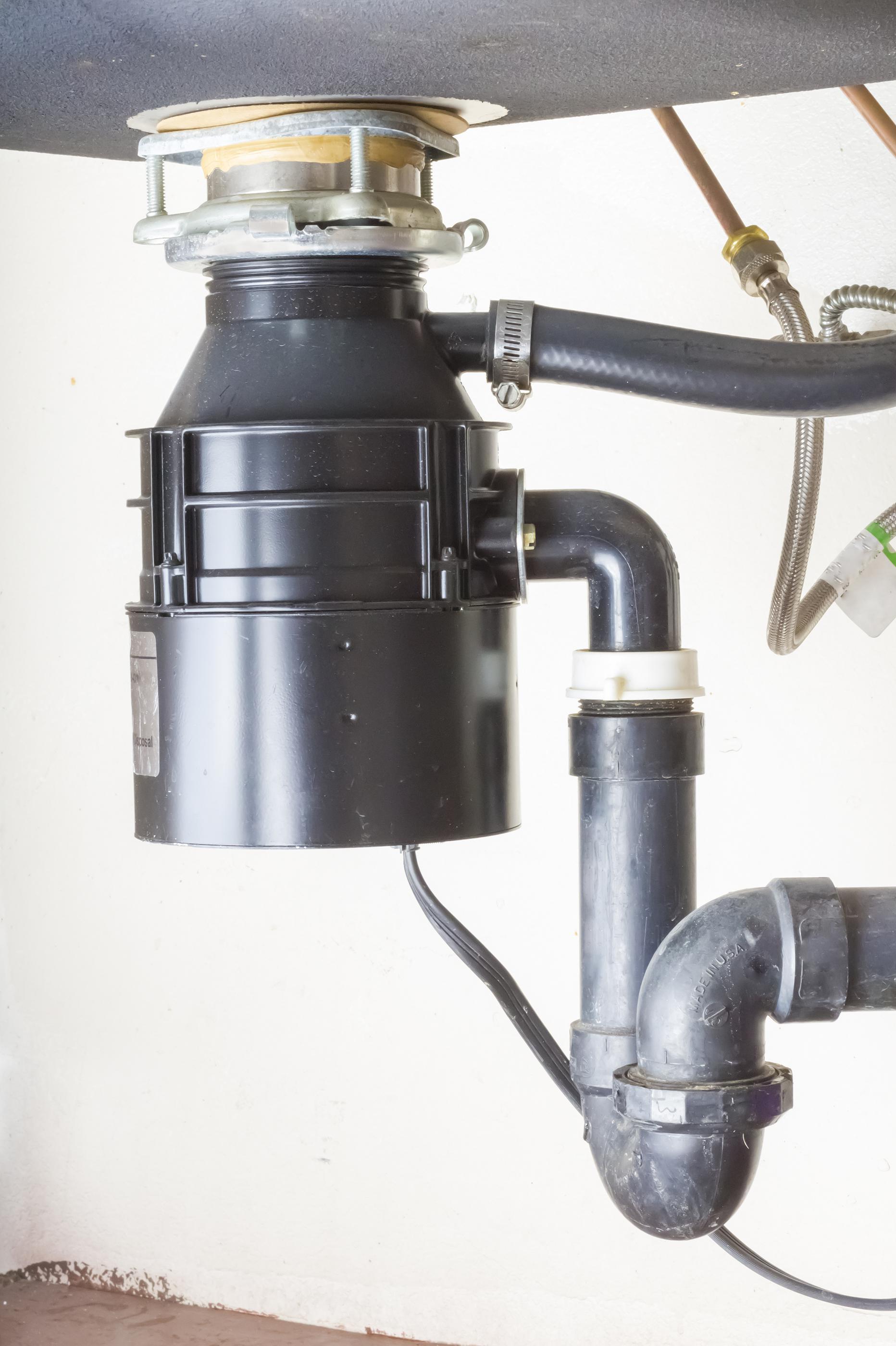
A disposal can spin just fine and still sit on top of a clogged drain. The clog might be right below the disposal or in the curved pipe under the sink, called the P-trap. It could also be farther down the pipe, behind the wall. If the disposal runs normally but water still won't drain, the problem is likely in the pipes.
A double sink gives you another clue. If water rises in the other side, both sides are probably sharing the same blocked pipe. If both sides drain slowly, the clog likely goes beyond the disposal itself.
Try a Plunger Before Reaching for Chemicals
A plunger can clear many food and grease clogs without taking any pipes apart. Use a small cup-style sink plunger, not the one from the bathroom. Add enough water to cover the plunger's rim. If you have a double sink, plug the other side with a stopper or wet rag. Then give it several firm, steady plunges.
When you stop, watch to see if the water starts to drain. If it improves but is still slow, try a few more times. If nothing changes after a few tries, the clog is probably farther down the line.
Why Chemical Drain Cleaner Is Usually a Poor First Choice
Chemical drain cleaners often can't break through packed food, grease, or a solid object. If the clog doesn't clear, you're left with a sink full of harsh chemicals. That makes it risky to plunge or open the pipes later. Never mix different drain cleaners, either.
A plunger is a safer first step because it uses water pressure instead of chemicals. If plunging doesn't work, it's time to call a plumber. Be sure to tell your plumber if you've already used a chemical cleaner.
What Commonly Clogs Disposal Drains?
Most kitchen clogs build up slowly over time. Grease and oil coat the inside of your pipes, and food scraps stick to that coating. Southern cooking is a big part of life around here. Bacon grease and frying oil are some of the most common clog causes we see.
Frequent clog sources include:
- Grease, bacon drippings, and cooking oil
- Stringy foods like celery, corn husks, and onion skins
- Coffee grounds
- Rice and pasta
- Eggshells
- Large amounts of food at once
- Things that aren't food
Big holiday meals and game-day spreads can make these problems worse. Sending too much food down at once can overwhelm both the disposal and the drain. The best fix is keeping that extra stuff out of the sink in the first place.
When the Problem Is Farther Down the Drain
Some clogs sit past the disposal and the P-trap. You might see both sides of the sink back up, or the water may come back after you plunge. Other drains nearby may slow down, too. Gurgling sounds and kitchen clogs that keep coming back are signs to call a plumber.
Many older homes in neighborhoods like East Nashville and Sylvan Park still have original drain pipes. Over the years, buildup inside those pipes can narrow the space for water to flow. A plumber can find out whether you need drain cleaning or a different repair.
How to Prevent the Next Garbage Disposal Clog
Scrape most food scraps into the trash or compost before you rinse your dishes. Run a steady stream of cold water while the disposal is on, and feed food in a little at a time. Let the water keep running for a few seconds after the disposal stops.
Never pour grease or cooking oil down the sink. Let it cool in a can or jar, then toss it in the trash. These small habits keep sticky, bulky waste out of your pipes and make cleanup easier.
A jammed disposal and a clogged drain need different fixes. A few safe steps can solve many simple problems on your own. But if the water still won't drain, our plumbers can track down the clog and get things flowing again. At Benjamin Franklin Plumbing®, we offer garbage disposal repair and clogged drain service across Middle Tennessee. We never charge extra for nights, weekends, or holidays, and if there's any delay, it's you we pay!®
Call Benjamin Franklin Plumbing® today for garbage disposal and drain service. We proudly serve Nashville, Franklin, Brentwood, Murfreesboro, and neighborhoods all across Middle Tennessee.

 Your Privacy Choices