
Plumbing systems are fairly complex, consisting of water supply pipes, drain pipes, and vent pipes. Each part of the system plays a crucial role in delivering clean water and removing wastewater, ensuring you can shower, do laundry and dishes, use the restroom, and go about your daily life without inconvenience. Each part also has multiple material options. By understanding the different aspects of your plumbing system and the available piping materials, you can better determine what’s best for your home and avoid potential health and safety concerns.
Water Supply Plumbing
The water supply side of a plumbing system is responsible for transporting clean, potable water throughout the house to sinks, showers, toilets, the water heater, dishwasher, washing machine, and other fixtures and appliances. The supply system includes the main water line, which is buried underground below the frost line and brings water into the home from the municipal water system or a private well. The main line enters through the home’s foundation and connects to a network of smaller pipes that distribute water to each plumbing fixture.
Interior water supply lines typically range in diameter from 3/8 inch to 1 inch. The main hot and cold supply trunks are commonly 3/4 inch, while larger homes may have 1-inch mains. Most branch lines supplying individual fixtures are 1/2 inch. Bathroom sink and dishwasher supply lines are often 3/8 inch. Pipe sizing ultimately depends on fixture demand and local plumbing code requirements.
Copper Piping
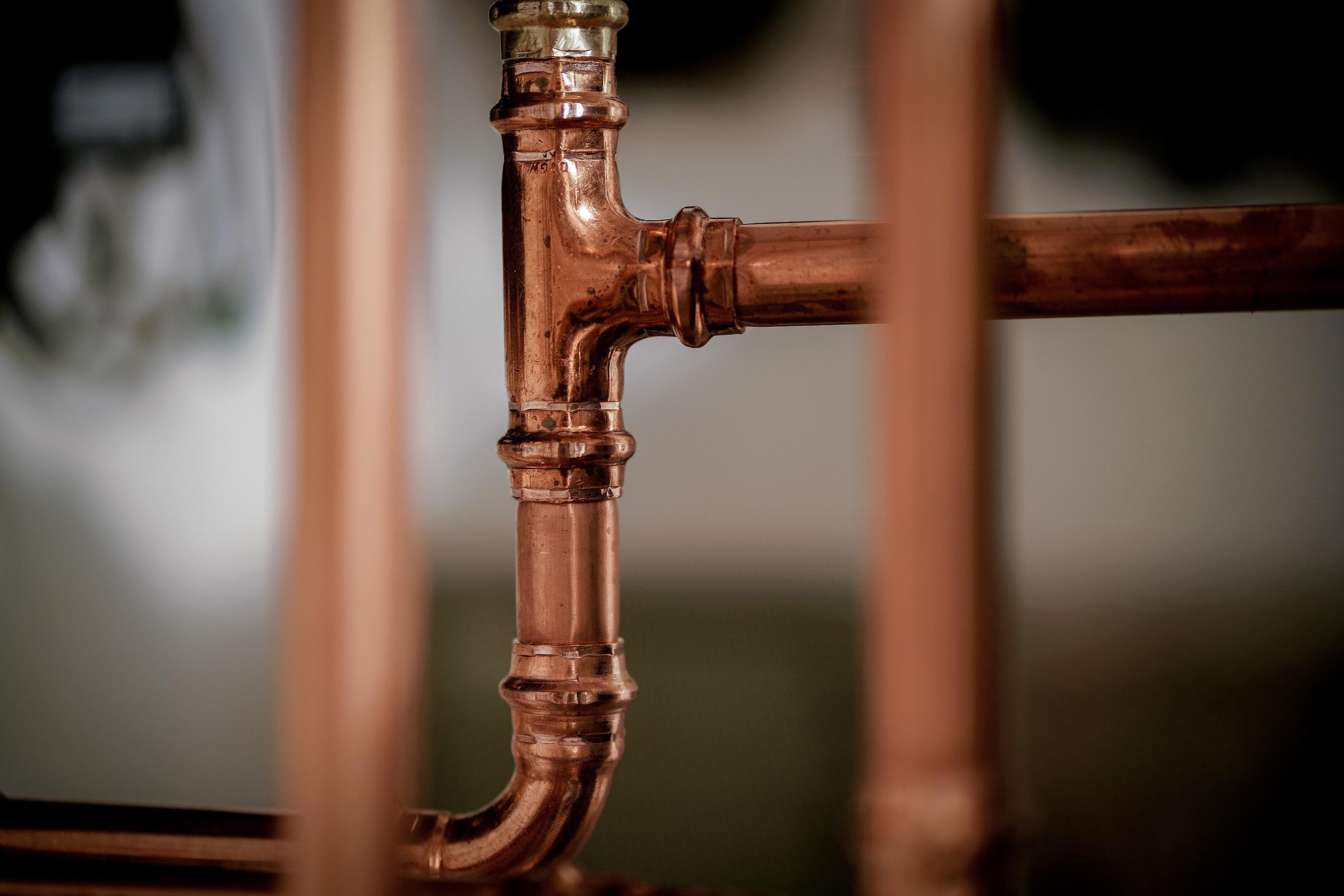
Many homes in the United States have copper piping for interior water supply lines. Copper is durable, corrosion-resistant, and does not allow gases to permeate the pipe walls. Properly installed copper piping can last 50 years or more. However, factors such as acidic water, high water pressure, or high mineral content can shorten its lifespan and lead to pinhole leaks. Copper is also rigid and can burst if water inside freezes.
PEX Piping
PEX (cross-linked polyethylene) piping is a newer and increasingly popular option for interior water lines. PEX is flexible, resistant to scale and chlorine, and generally less expensive to install than copper. Because it comes in long rolls, plumbers can run continuous lengths with fewer fittings, reducing potential leak points.
PEX is also more resistant to freeze damage than rigid piping, as it can expand slightly if water freezes inside. However, it is not suitable for prolonged direct UV exposure and must be installed according to local code requirements.
Galvanized Steel
Galvanized steel pipes were commonly used in American homes until the 1960s. These pipes are coated with zinc to slow corrosion. Over time, however, the coating can deteriorate, allowing corrosion to build up inside the pipe and restrict water flow. In older systems, corrosion may also introduce contaminants into the water. For this reason, many homeowners choose to replace aging galvanized water lines with modern materials like copper or PEX.
PVC
PVC (polyvinyl chloride) is sometimes used for underground cold-water service lines, depending on local codes. It is durable, corrosion-resistant, and typically long-lasting when properly installed and protected from UV exposure. However, PVC is not approved for interior hot water distribution.
HDPE
HDPE (High-Density Polyethylene) is another material used for underground water service lines. It is flexible, highly durable, and resistant to cracking. HDPE pipe sections are typically joined using heat fusion, which creates strong, leak-resistant connections. Its flexibility also makes it well-suited for areas with shifting soil conditions.
Drain, Waste, and Vent Plumbing
The drain, waste, and vent (DWV) system removes wastewater from the home and safely vents sewer gases. Drain pipes from sinks, toilets, tubs, and appliances connect to branch lines that feed into a main vertical stack. Wastewater then flows through the main sewer line to the municipal sewer system or a private septic system.
Every plumbing system also includes vent pipes that extend through the roof. These vents allow air to enter the drainage system, preventing vacuum conditions that could slow drainage or siphon water from fixture traps. They also allow sewer gases to safely escape outdoors rather than entering the home.
PVC
Most modern DWV systems use PVC piping for drain, sewer, and vent lines. PVC is lightweight, corrosion-resistant, cost-effective, and relatively easy to install. When properly installed, PVC drain systems can last for decades.
ABS
ABS (acrylonitrile butadiene styrene) is another plastic material used in DWV applications. ABS is strong and performs well in colder temperatures. It is typically joined using solvent cement, similar to PVC, though the two materials require different types of cement and should not be directly connected without proper transition fittings. Local building codes often determine whether PVC or ABS is permitted.
Cast Iron
Older homes may have cast-iron drain and sewer lines. Cast iron is strong and provides excellent sound dampening, making it quieter than plastic piping. However, over time, cast iron can corrode internally and develop cracks or scale buildup. Beginning in the 1970s and 1980s, PVC and ABS largely replaced cast iron in residential construction due to lower cost and easier installation. If your home still has aging cast-iron piping, a professional inspection can determine whether repairs or repiping are recommended.
Nashville's Local Plumbing Experts
From plumbing installation and repiping to leak detection and repairs, the experienced team at Benjamin Franklin Plumbing® in Nashville has solutions for all your plumbing needs. Our local, independently owned company is dedicated to providing dependable, cost-effective plumbing services and ensuring every customer is 100% satisfied with the work we perform. We pride ourselves on prompt service and are available 24/7 to respond to plumbing emergencies. For more information or to schedule service for your home, contact us today.

 Your Privacy Choices