
Why Alpharetta Homeowners Keep Getting Pinhole Leaks in Their Copper Pipes — And What to Do About It
You fixed a pinhole leak six months ago. Now there's another one. Different room, different wall, same problem — a tiny hole in a copper pipe releasing a slow, steady stream of water behind your drywall. If this pattern sounds familiar, you are not alone, and it is not bad luck. Pinhole leaks in copper plumbing are a well-documented, widespread issue across the North Fulton and Cobb County area, affecting thousands of homes built primarily in the 1980s and early 1990s. Understanding why they keep coming back is the first step toward making them stop for good.
What Is a Pinhole Leak and Why Is It So Problematic?
A pinhole leak is exactly what it sounds like — a small, puncture-sized hole that develops in the wall of a copper pipe due to progressive corrosion from the inside out. The hole starts microscopic, barely a drip. Over weeks and months it slowly enlarges. By the time you notice a water stain on the ceiling, warped flooring, or a musty smell from inside a wall, the leak has often been active long enough to saturate insulation, soak wood framing, and create the conditions for mold growth.
What makes pinhole leaks particularly frustrating is that they give almost no external warning. The copper pipe looks completely normal from the outside — no discoloration, no visible damage. The interior of the pipe, however, may be pitted and degraded in ways that are only visible once the pipe is cut open. This is why a single repaired pinhole is often a sign of broader system deterioration rather than an isolated incident.
If you have had more than one pinhole leak in your home, treating each one as an isolated repair is almost always the wrong strategy. Once pitting corrosion takes hold in a copper system, it tends to continue appearing throughout the home until the underlying cause is addressed.
Why Alpharetta and North Fulton County Homes Are Especially Affected
The housing age factor
Pinhole leaks are most common in homes built between approximately 1978 and 2000 — a range that covers a large share of Alpharetta's residential neighborhoods, including communities near Windward Parkway, along Jones Bridge and Haynes Bridge Roads, in older sections of Alpharetta near downtown, and throughout Roswell's established neighborhoods such as Brookfield Country Club and Horseshoe Bend. These homes were plumbed with copper that is now 25 to 45 years old. Copper is a durable material, but it is not immune to the cumulative effects of corrosion, water chemistry, and time. The 25 to 40 year mark is when pitting corrosion typically becomes visible in the form of pinhole leaks.
The water chemistry factor
North Fulton County’s water is drawn from the Chattahoochee River and treated at the Atlanta-Fulton County (Tom Lowe) Water Treatment Plant, using chlorine as the disinfectant. Beyond the water itself, several factors contribute to pinhole leaks in older copper systems: the age of the pipe, localized pitting corrosion that develops on the interior wall over decades, original installation practices such as excess solder flux left at joints, and in some cases stray-current electrolysis from improper electrical grounding bonded to copper lines. There is no single simple cause. What is clear is that pinhole leaks in 1980s-era copper plumbing are a genuine, well-documented regional pattern across metro Atlanta — documented closely enough that the Cobb County-Marietta Water Authority, which serves the neighboring Cobb County area, commissioned a 2018 forensic study with researchers at Virginia Tech to examine local pipe samples. The takeaway for a North Fulton homeowner is the same either way: in a home with aging copper, a recurring pinhole leak is a sign of broader pipe-wall deterioration, not an anomaly specific to your house.
The high water pressure factor
Many Alpharetta homes, particularly those in newer subdivisions, can experience water pressure that runs above 80 PSI — higher than the 60 to 80 PSI range that copper systems are designed to handle long-term without accelerated wear. Elevated pressure does not cause pinhole leaks on its own, but it speeds up the corrosion process significantly. A pressure-reducing valve (PRV) set to maintain pressure in the appropriate range can slow the progression of pitting corrosion — though in a home where the copper is already significantly degraded, it will not reverse the damage that has already occurred.
Repair vs. Repipe: How to Know Which Is Right for Your Home
This is the question every Alpharetta homeowner facing a second or third pinhole leak eventually asks, and the honest answer depends on your home's specific situation. Here is a practical framework:
Repair makes sense when:
- This is your first pinhole leak in a home built after 1990 where the copper is relatively younger
- The leak is genuinely isolated — a single failed joint from improper installation rather than internal pitting corrosion
- A plumbing inspection confirms the rest of the system shows no signs of pitting or corrosion
Repiping is worth serious consideration when:
- You have had two or more pinhole leaks, especially in different areas of the home
- Your home was built in the 1980s with original copper that has never been replaced
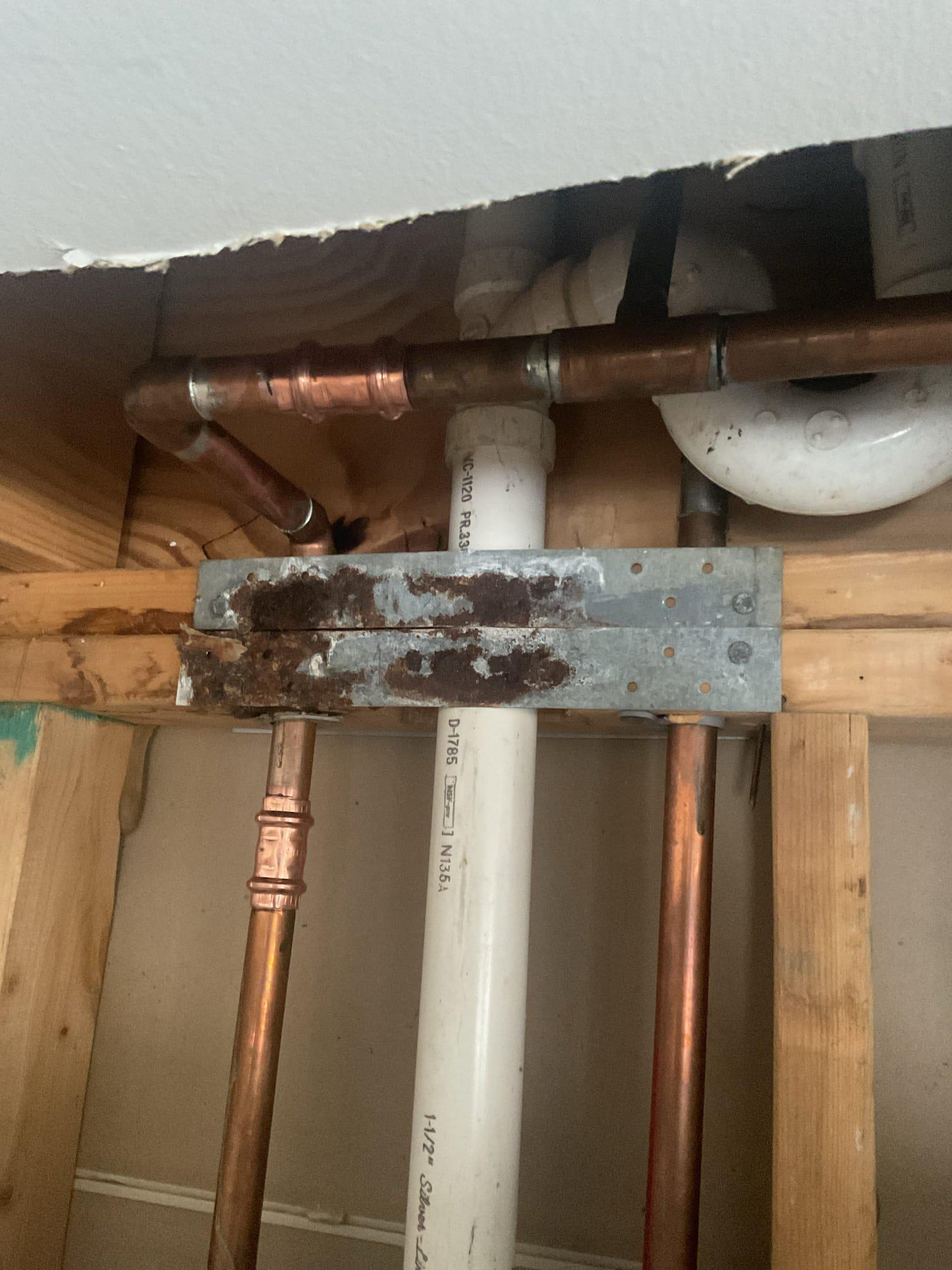
- A plumber opens a wall for a repair and the surrounding pipe shows visible pitting or interior corrosion
- You have already spent $500 or more on pinhole leak repairs in the past two years — at that pace, the cost of ongoing repairs will exceed repiping within a few years
- You are planning to sell your home — buyers and their inspectors flag recurring copper leaks, and a whole-home repipe is a meaningful selling point
The permanent solution for a copper system in advanced degradation is whole-home repiping with PEX tubing. PEX is a flexible plastic material that is not vulnerable to the same corrosion mechanisms that affect copper in our local water chemistry. It is the material of choice for repipe projects throughout the Atlanta metro area and carries a long service life under normal residential conditions. Most whole-home repipe projects in an Alpharetta-sized house are completed in one to two days with targeted wall openings — far less disruptive than most homeowners expect before they start.
Signs You May Have a Pinhole Leak Right Now
Because pinhole leaks develop slowly and are hidden inside walls, floors, and ceilings, many homeowners do not discover them until the damage is already significant. Here are the early warning signs worth taking seriously:
- Your water bill has increased by 10 to 20 percent or more without any change in your household water use
- You hear the faint sound of running water when all faucets and fixtures are off
- A small water stain or discoloration has appeared on a ceiling, wall, or floor — even if it seems minor
- You notice a musty or damp odor coming from inside a wall or from a room with no obvious moisture source
- Your water pressure has decreased noticeably, particularly if the drop happened gradually over several months
- Green staining or oxidation has appeared on copper pipe connections near your water heater or under sinks
Any one of these signs warrants a call to a licensed plumber for leak detection. The technology available today — thermal imaging cameras and acoustic detection equipment — allows us to locate pinhole leaks precisely without opening walls unnecessarily. The earlier a leak is caught, the smaller the repair footprint and the lower the risk of mold and structural damage.
What Benjamin Franklin Plumbing® of Alpharetta Can Do
Our team serves homeowners throughout Alpharetta, Roswell, Cumming, Milton, and Johns Creek, and we diagnose and repair pinhole leaks in copper plumbing every week. We use thermal imaging and acoustic detection to locate leaks without guesswork, give you a clear diagnosis of your system's overall condition, and provide honest guidance on whether repair or repiping is the right path for your specific home and budget.
For homes where whole-home repiping is the right answer, we handle the full project — from opening the minimum number of walls needed to access the existing copper, to running new PEX throughout the home, to testing and restoring water service. We provide flat-rate pricing before any work begins so you know exactly what the project involves and what it costs before we start.
Alpharetta and North Fulton homeowners: if you have noticed any of the warning signs above, or if you have already had one pinhole leak repaired and want to know the condition of the rest of your system, call us at (678) 833-2754 or book an appointment online. We are available 24 hours a day, 7 days a week.

 Your Privacy Choices