
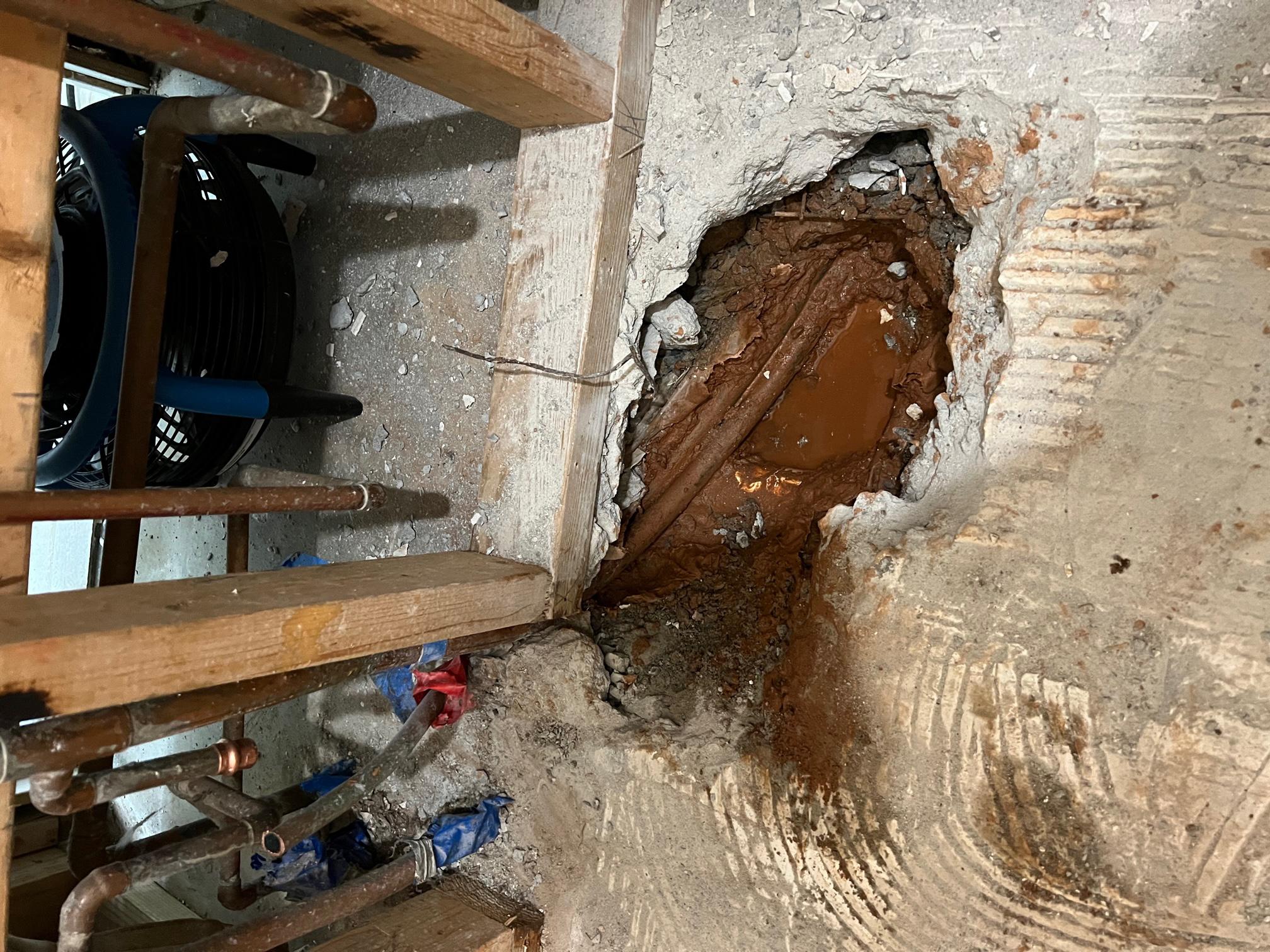
Of all the plumbing problems we diagnose in Alpharetta homes, slab leaks are among the most expensive to ignore and the easiest to miss in their early stages. A burst pipe announces itself immediately. A slab leak — a break or leak in a water line running beneath your home's concrete foundation — can go undetected for weeks or months while quietly causing structural damage, promoting mold growth beneath the slab, and driving up your water bill. By the time most homeowners notice something is wrong, the damage has already been accumulating for some time.
Understanding the warning signs, and why Alpharetta homes are particularly prone to this problem, is the best way to catch a slab leak early — when detection and repair are far less disruptive and far less expensive than they become later.
Why Alpharetta Homes Are at Elevated Risk
Slab leaks are not random. They tend to cluster in specific housing types, age ranges, and geographies — and Alpharetta checks multiple boxes.
Slab-on-Grade Construction
Most residential construction in Alpharetta, particularly from the mid-1980s through the early 2000s, uses slab-on-grade foundations. Rather than a basement or crawl space where plumbing is accessible and visible, water supply lines and, in some configurations, drain lines run directly through or beneath the poured concrete. When a leak develops in one of those embedded lines, the water has nowhere to go but sideways through the soil beneath the slab and eventually upward through cracks in the concrete or the flooring above it.
Georgia Clay Soil Movement
North Georgia's characteristic red clay soil expands significantly when wet and contracts when it dries out. This seasonal cycle — wet springs, dry summers, wet falls — creates continuous ground movement beneath your foundation. Over years and decades, that movement stresses copper supply lines at their joints and fittings, creating micro-cracks that eventually become leaks. Alpharetta's clay-heavy soil means this pressure on buried plumbing is constant and cumulative.
The Age of the Housing Stock
A large portion of Alpharetta's homes were built during the development boom of the late 1980s through late 1990s. Those homes are now 25 to 40 years old — precisely the age range at which copper supply lines, installed correctly and used normally, begin to experience the effects of pitting corrosion, ground movement stress, and decades of water pressure cycling. The combination of the right age and the right soil conditions makes slab leaks a consistent finding in Alpharetta homes of this vintage.
The Seven Warning Signs of a Slab Leak
None of these signs alone is definitive, but any one of them — and especially any combination of two or more — warrants a call to a plumber for an assessment.
- A Water Bill That Has Increased Without Explanation
This is often the first signal, and the one most homeowners dismiss or attribute to other causes. If your monthly water bill has climbed — not dramatically, but noticeably, over the course of several billing cycles — without any corresponding change in your household habits, something in your plumbing system is using water continuously. A slow slab leak from a pressurized supply line runs water around the clock. Over a month, even a small but constant flow adds up to a measurable increase on your bill. If your bill is up and you cannot explain why, do not wait for the next cycle to see if it corrects itself.
- Warm or Hot Spots on Your Floor
This is one of the most specific indicators of a slab leak, and it only applies to leaks in hot water lines. When a hot water supply line beneath your slab is leaking, the escaping water heats the concrete and flooring above the leak point. Walk across your tiled floors barefoot — a warm or hot patch that does not correspond to direct sunlight or a heating vent below is a classic slab leak sign. This symptom is particularly common in bathrooms, kitchens, and utility rooms where hot water lines are concentrated beneath the slab.
- The Sound of Running Water When Everything Is Off
Turn off every faucet, appliance, and fixture in your home. Then listen. If you can hear a faint sound of flowing or trickling water somewhere in or beneath the home with everything shut off, that water is escaping somewhere in the system. In slab homes, this sound often seems to come from the floor itself. It can also occasionally be heard near the water meter outside. This is a strong signal that warrants immediate investigation.
- Unexplained Musty or Earthy Odors
Water leaking beneath a slab saturates the soil and, over time, creates conditions for mold and mildew growth in the space between the soil and the underside of the concrete. That moisture and microbial activity often produces a musty, damp, or earthy smell that enters the living space through the flooring or near baseboards. If a room in your home has developed a persistent musty odor that cleaning does not resolve, and you cannot identify an obvious source like a bathroom leak or condensation issue, a slab leak is a likely culprit.
- Cracks at the Base of Walls or Where the Floor Meets the Wall
Water migrating beneath and through a slab can cause subtle shifts in the foundation. These shifts manifest as hairline cracks — typically appearing at the base of interior walls, in the corners where flooring meets the wall, or running horizontally along a wall low to the ground. Not every crack in a home indicates a plumbing problem, but cracks that appear relatively quickly, are in locations near plumbing walls, or are accompanied by any of the other signs on this list deserve investigation.
- Low Water Pressure Throughout the Home
A slab leak that has grown from a small drip into a more significant break can cause a measurable drop in water pressure at your faucets and showers. This is because water that should be delivering pressure to your fixtures is instead escaping beneath the slab. If you notice that water pressure has decreased across multiple fixtures in your home — not just one faucet that might have a clogged aerator — and the pressure drop has been gradual rather than sudden, a supply line leak beneath the slab is one of the most likely causes.
- Visible Moisture, Wet Spots, or Buckling Flooring
By the time a slab leak has progressed to the point of producing visible moisture on floors, saturating carpet padding, or causing hardwood or laminate flooring to buckle and warp, the leak has been active for some time and the damage is already significant. If you find unexplained wet spots on floors — particularly in areas away from obvious water sources like sinks or showers — this is an urgent sign that requires immediate attention.
What Happens If a Slab Leak Goes Unaddressed
The consequences of a slab leak that is not caught and repaired promptly are serious and compounding. Prolonged water intrusion beneath a slab can undermine the soil's structural integrity, leading to foundation movement and cracking that is far more expensive to address than the original plumbing repair. Moisture trapped beneath a slab or in walls creates ideal conditions for mold growth — which has both health implications and significant remediation costs. And the longer the water runs, the more saturated building materials become, increasing the scope of damage remediation required after the leak is fixed.
Early detection is not just about saving money on the repair itself. It is about limiting the cascade of secondary damage that a slow, undetected leak causes over weeks and months.
How We Find and Fix Slab Leaks in Alpharetta
When a homeowner calls us with suspected slab leak symptoms, we begin with non-invasive detection before any concrete work.
- Thermal imaging cameras identify temperature anomalies at the floor surface. A leaking hot water line appears as a distinct warm zone even through tile, hardwood, or carpet.
- Acoustic leak detection equipment amplifies the sound of water escaping under pressure through the pipe wall or through the concrete, allowing us to pinpoint the exact location of the leak with precision.
- Whole-home pressure testing can confirm that pressure is being lost within the pipe system, helping distinguish a slab leak from other possible sources.
Once we have located the leak, we open only the minimum area of concrete necessary to access and repair it. We explain the repair options clearly, provide flat-rate pricing before starting, and handle patching and restoration as part of the job. In cases where a home has experienced multiple slab leaks or where assessment reveals widespread pipe degradation, we will honestly recommend whether a full or partial replumb with PEX is the better long-term investment than another targeted repair.
Benjamin Franklin Plumbing® of Alpharetta serves homeowners throughout Alpharetta, Cumming, Roswell, Milton, and Johns Creek. Available 24/7 — call (678) 833-2754 or book online. Licensed, background-checked, and drug-tested technicians. If we are ever late, we pay you $5 for every minute — up to $300.

 Your Privacy Choices