
Most homeowners never think about their water heater until the hot water runs out. In Wichita, that moment tends to come sooner than it should, and the reason is in the water itself. Regular water heater maintenance in Wichita is one of the most effective ways to protect your unit from what our local water leaves behind every time it's heated.
Wichita has Hard Water, and your Water Heater Feels It
Water hardness is the amount of dissolved calcium and magnesium in the water. The U.S. Geological Survey classifies water between 121 and 180 mg/L (as calcium carbonate) as "hard," and anything above 180 mg/L as "very hard." Wichita's water falls on the hard end of that scale, and our neighboring communities like Maize and Goddard also face similar issues.
As we explained in our breakdown of Wichita's 2026 Water Quality Report, the city's water meets all federal and state drinking water standards, and hard water is a plumbing issue, not a safety issue. The minerals are harmless to drink, but they're tough on equipment. Heat makes dissolved minerals come out of the water, and your water heater is where that happens most.
To find out exactly how hard your water is, request a free professional water test. Home test strips give a rough estimate, but a certified lab analysis reveals the full picture - including iron, pH, and other contaminants beyond just hardness.
What Sediment and Scale Do Inside Your Tank
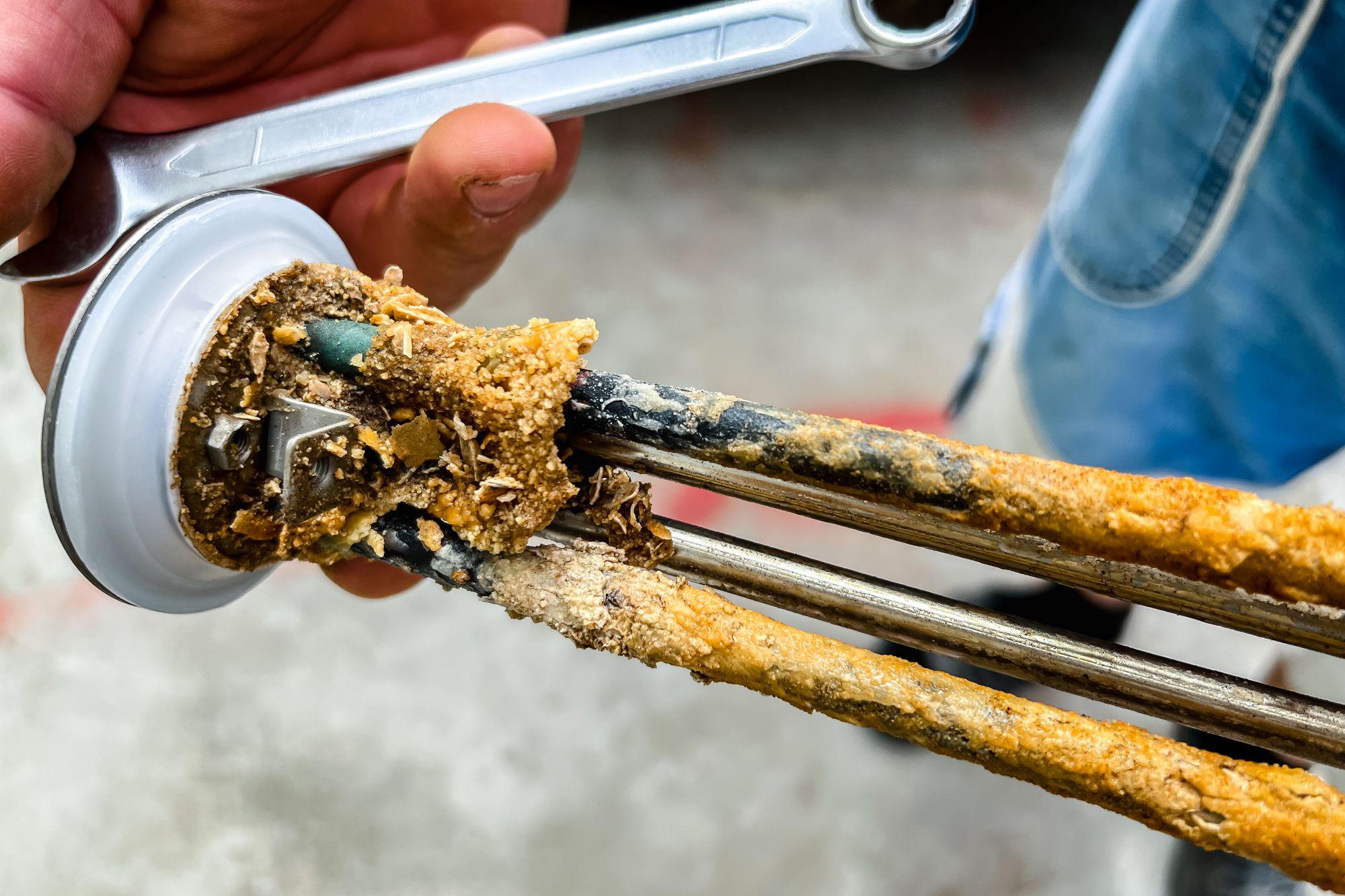
Every time your water heater fills with fresh water and heats it, a little more mineral content separates out and settles at the bottom of the tank. Over months and years, that becomes a hard layer of sediment and scale. Here's what it does:
- Forces the unit to work harder. The layer sits between the heat source and the water, so it takes more energy to heat the same tank. That means higher utility bills and longer waits for hot water.
- Overheats the bottom of the tank. In gas units, sediment traps heat against the steel at the base. In electric units, it buries the lower heating element, which can burn out early.
- Speeds up corrosion. Sediment can hold moisture against the tank lining, and the anode rod (the sacrificial part that protects the tank from rust) wears out over time.
- Clogs the drain valve and pipes. Loose sediment can block the valve, which makes future flushing harder.
The longer that layer builds, the harder it is to remove, which is why a yearly flush beats waiting for symptoms.
What Annual Water Heater Maintenance Includes
A professional tune-up tackles the problems before they turn into failures. A thorough visit typically includes:
- Flushing the tank to remove sediment and scale.
- Inspecting the anode rod, which may need to be checked more often in hard water areas, and replacing it when it's heavily worn.
- Testing the temperature and pressure relief valve, a key safety component.
- Checking connections, the drain valve and venting for leaks, corrosion and wear.
- Checking the temperature setting for safety and efficiency.
If your heater has gone years without a flush, have a professional evaluate it first. Disturbing a thick layer of sediment in an old tank can sometimes expose leaks or valve problems, and it's better to find that out with a plumber on site.
For a deeper look at keeping your whole system in shape, see our guide to preventative plumbing maintenance.
What Happens If You Skip Maintenance
Sediment doesn’t cause water heaters to fail all at once. It builds quietly until something gives, and "something" is usually inconvenient. A neglected water heater can:
- Leak or burst, sending gallons of water across your floor and into drywall and belongings
- Lose all hot water with no warning, often when the house is full
- Burn out an element or overheat from scale buildup
- Run rusty or discolored water as the tank lining deteriorates
Failures also tend to happen at the worst times: holidays, weekends, the middle of the night. If your water heater is leaking or has failed, shut off the water supply to the unit and the power or gas, then call us. Our emergency plumbing team is available 24/7, with no overtime charges for nights, weekends or holidays.
Annual maintenance is what keeps a small problem from becoming that kind of emergency.
Make It Automatic with the Ben Franklin Club
The easiest way to remember annual maintenance is to have it on the calendar. The Ben Franklin Club membership is $129 per year and includes:
- One annual visit
- An annual plumbing health and safety check
- Priority scheduling on all appointments
- A reduced trip charge
- 15% off repairs
It's a simple way to have a licensed plumber look at your plumbing every year, including your water heater, before problems surface. Members also get priority scheduling if something does go wrong. Learn more about Club membership here.
Schedule Your Water Heater Maintenance in Wichita
Wichita's hard water isn't going anywhere, but a worn-out water heater doesn't have to be the result. Contact Benjamin Franklin Plumbing of Wichita to schedule maintenance, ask about a water heater repair, or join the Ben Franklin Club. You'll get honest, upfront pricing and an experienced technician. Call or book online today.

 Your Privacy Choices