
Building a home is exciting, but plumbing is one of the most complex systems hidden behind your walls, beneath your floors, and throughout your property.
Most homeowners think about paint colors, cabinets, countertops, and flooring long before they think about water lines, drain systems, shut-off valves, and water heaters. However, decisions made during construction can affect your home's efficiency, comfort, maintenance requirements, and long-term operating costs for decades.
Whether you're building in Wichita, Maize, Goddard, Derby, Andover, or another surrounding community, understanding the basics of new construction plumbing can help you make informed decisions throughout the building process.
Let's walk through the process from the ground up.
Stage 1: Planning and Designing the Plumbing System
Long before a plumber installs a single pipe, the home's plumbing layout must be designed.
During this phase, plumbers determine the location of:
- Bathrooms
- Kitchens
- Laundry rooms
- Water heaters
- Outdoor faucets
- Gas lines
- Irrigation connections
- Sewer and water service lines
This planning process also helps determine fixture placement, pipe routing, water pressure requirements, drainage capacity, and compliance with local building codes.
Careful planning now can help prevent costly changes later.
Stage 2: Installing Underground Plumbing
Before the foundation is poured, plumbers install portions of the underground plumbing system. This stage typically includes:
✔ Sewer lines
✔ Water service lines
✔ Drainage piping
✔ Vent piping connections
✔ Underground gas lines
Plumbers also perform pressure tests to ensure the system is functioning properly before construction continues.
Stage 3: Rough-In Plumbing
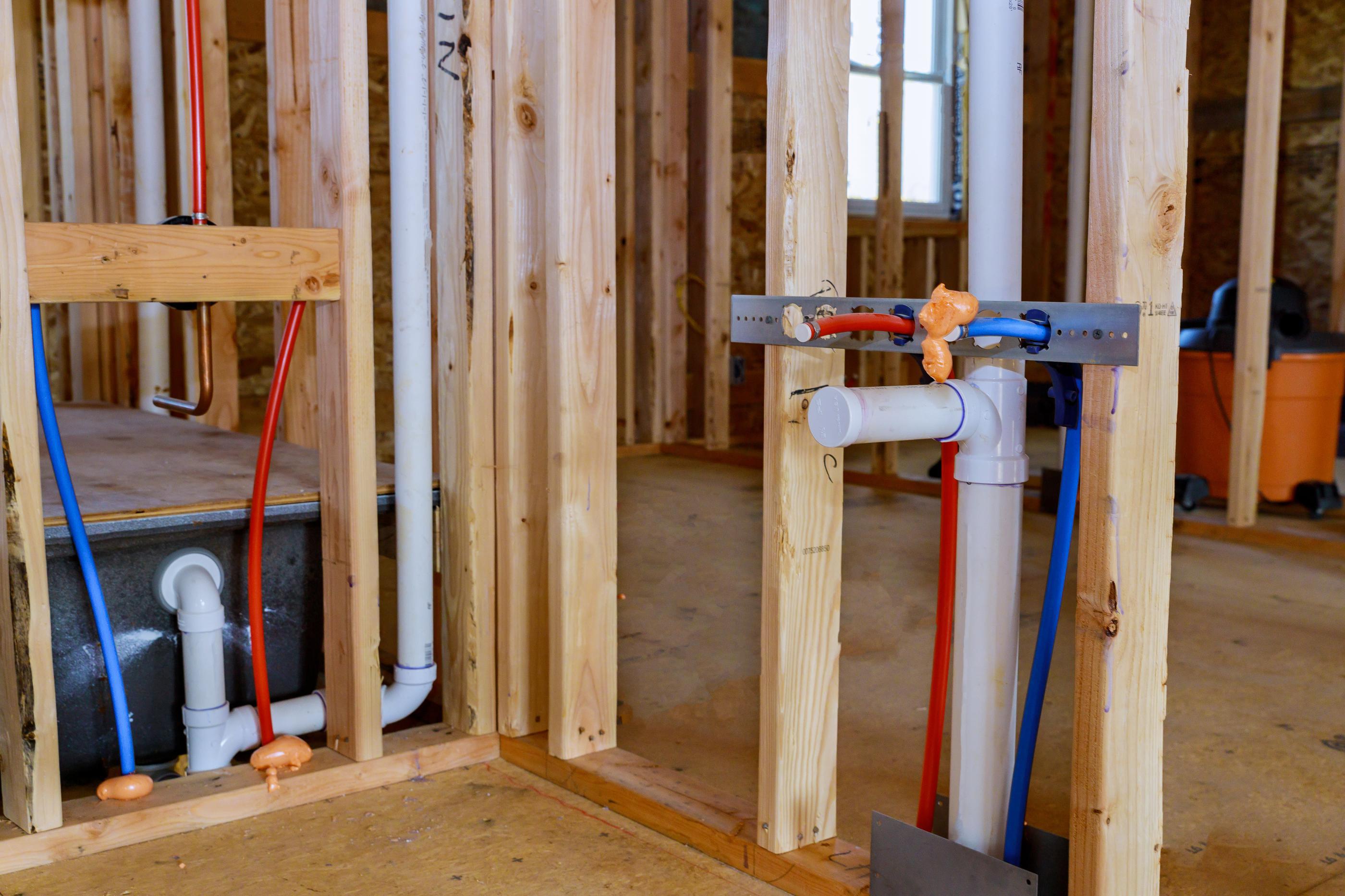
The rough-in phase is where the home's plumbing infrastructure begins to take shape.
At this stage, plumbers install:
- Water supply lines
- Drain lines
- Vent stacks
- Gas lines
- Bathtub and shower connections
- Toilet flanges
- Exterior hose bibs
If you've ever walked through a home under construction and seen pipes extending from the walls, you've seen rough-in plumbing. This stage creates the framework that will eventually connect to the home's fixtures and appliances.
Stage 4: Water Heater Installation
Every home needs a reliable source of hot water. During construction, homeowners typically choose between:
Traditional tank water heaters
These systems store heated water in a reservoir until it is needed. These typically have a lower upfront cost and can be set up on gas or electric power. In 90% of homes, we install these units in the basement or laundry room.
Tankless water heaters
These systems heat water on demand and can improve energy efficiency while saving space. They have a lifespan up to 20 years, making this a longer term investment in your new construction plumbing.
Many Wichita homeowners also take this opportunity to install:
- Whole-home filtration systems
- Water softeners
- Leak detection devices
- Recirculation systems
Making these upgrades during construction is often easier and more cost-effective than installing them later.
Stage 5: Fixture Installation
Once drywall, flooring, and cabinetry have been completed, the finishing phase begins.
This stage includes the installation of:
- Toilets
- Faucets
- Sinks
- Showers
- Bathtubs
- Dishwashers
- Garbage disposals
- Ice maker connections
Every fixture is tested to ensure proper operation and leak-free performance.
Stage 6: Final Testing and Inspection
Before the home is ready for move-in, the plumbing system undergoes a final inspection.
In Wichita and unincorporated Sedgwick County, this inspection falls under the Metropolitan Area Building and Construction Department (MABCD) Plumbing Division, which inspects plumbing and gas piping systems during construction to confirm compliance with adopted codes, safety standards, and approved plans.
This process helps confirm:
- Proper water pressure
- Adequate drainage
- Leak-free connections
- Safe gas line operation
- Code compliance
- Proper fixture installation
At this point, homeowners are often given information about maintenance schedules and system operation.
Upgrades Many Wichita Homeowners Choose During Construction
Building a home gives you the opportunity to prepare for future needs.
Some popular upgrades include:
Smart leak detection systems
Devices such as LeakSecure® can help monitor water usage and identify leaks before significant damage occurs.
Water softeners
Wichita's hard water can contribute to mineral buildup inside plumbing fixtures and appliances. Installing a water softener during construction may help protect your plumbing system from scale accumulation.
Whole-home filtration systems
Many homeowners choose to improve taste, reduce sediment, and add an extra layer of filtration.
Garage utility sinks
These sinks can be useful for gardening, cleaning, and household projects.
Outdoor kitchens and gas fire pits
Outdoor living spaces remain a popular addition throughout the Wichita area.
Why Choosing the Right Plumbing Contractor Matters
New construction plumbing isn't simply about connecting pipes.
Plumbers must understand:
- Water pressure calculations
- Fixture unit loads
- Venting requirements
- Pipe sizing
- Gas line installation
- Local building codes
- Long-term maintenance considerations
A well-designed plumbing system can improve efficiency, increase reliability, and help homeowners avoid future repairs.
Partner With a Trusted Wichita Plumbing Team
The plumbing hidden behind your walls is one of the most important investments you'll make in your new home. Choosing the right fixtures and planning ahead can help protect that investment for years to come.
Benjamin Franklin Plumbing of Wichita works with homeowners, builders, and contractors throughout the area to design, install, inspect, and maintain plumbing systems for new construction projects. From the first pipe to the final inspection, our team helps ensure every component is installed with quality, efficiency, and long-term performance in mind.

 Your Privacy Choices