Your garbage disposal works harder than almost any other appliance in your kitchen. It runs multiple times a day, handles everything from coffee grounds to vegetable scraps, and rarely gets any attention until something goes wrong. With a little routine maintenance, a garbage disposal can last 10 to 15 years in a Wichita home. Neglect it, and you are looking at odors, clogs, motor failure, and an unplanned call to a plumber.
This guide covers everything Wichita homeowners need to know to keep their garbage disposal running cleanly and efficiently (what to put in it, what to keep out, how to clean and deodorize it, how to troubleshoot the most common problems, and when a problem is beyond a DIY fix.)
How a Garbage Disposal Works
Understanding the basics helps you take better care of the appliance. A garbage disposal is not a blender with blades. It uses a spinning plate called an impeller disc and fixed grinding components called impeller blades or lugs to break food waste into small particles that can pass safely through your drain pipes and into the sewer system. The motor drives the impeller disc; the lugs do the grinding against a stationary grind ring.
This means the disposal can be damaged by materials that are too hard, too fibrous, or too sticky to be broken down by that grinding action -- not by sharpness or lack of it. The common advice to sharpen disposal blades with ice cubes is a myth. There are no blades to sharpen. Ice cubes are harmless, but they are cleaning the grinding chamber, not sharpening anything.
For more on how your kitchen plumbing works together, see our guide on kitchen plumbing services in Wichita.
What You Can Put in a Garbage Disposal
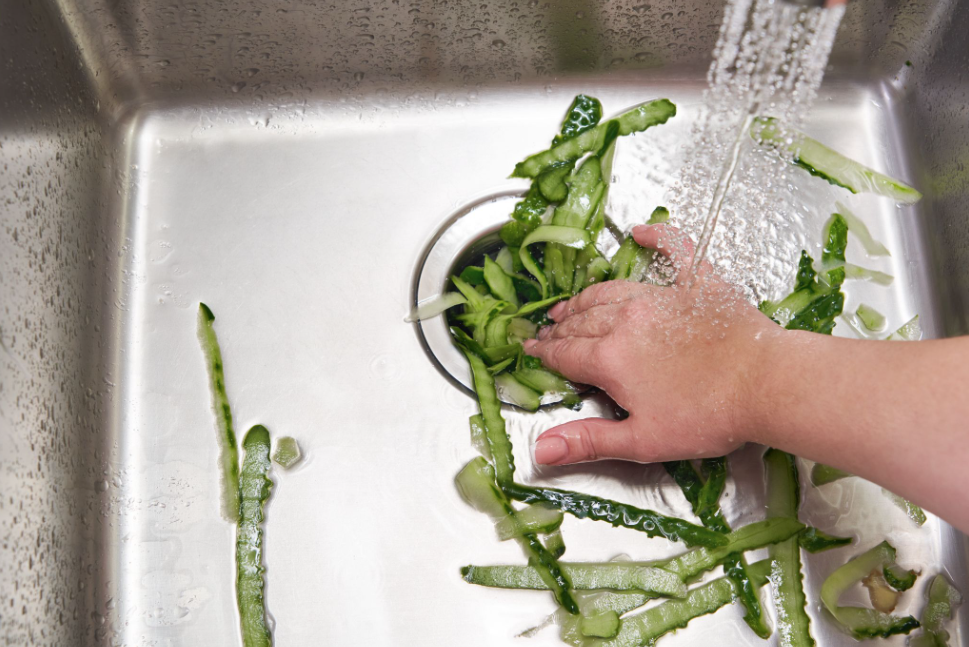
Most soft food waste is fair game for a garbage disposal:
- Soft fruit and vegetable scraps (excluding the exceptions below)
- Cooked meat scraps in small amounts
- Small amounts of citrus peels -- lemon and lime quarters are also good for deodorizing
- Cooked rice, pasta, and bread in small amounts (though these may be OK for your disposal, they can accumulate in the drain
- Ice cubes -- helpful for cleaning the grinding chamber
- Dish soap and water -- running the disposal with soapy water cleans residue from the chamber
The general rule: if you would have no trouble chewing it yourself, and it is not fibrous or sticky, the disposal can probably handle it in reasonable quantities.
What You Should Never Put in a Garbage Disposal
This is where most disposal problems start. The following items cause the majority of garbage disposal clogs, jams, odors, and motor failures:
Grease, Fats, and Oils
Hot grease can cause disposal issues by creating a coating that leads to inefficiency and overheating, potentially wearing out your motor. Hot grease poured down the drain solidifies as it cools and coats the inside of your drain pipes and disposal chamber. Over time this buildup narrows the drain opening and creates an adhesive surface that traps other debris. This is one of the leading causes of kitchen drain clogs in Wichita homes.
Pour grease and oil into an empty can or jar and dispose of it in the trash once it solidifies. If you already have grease buildup in your drain, hydrojetting from our drain cleaning team can clear it.
Fibrous Vegetables
Celery, asparagus, artichokes, corn husks, onion skins, and similar fibrous plant materials wrap around the impeller and jam the motor. The long fibers tangle in the spinning mechanism and can burn out the motor if the jam is bad enough.
Pasta, Rice, and Bread in Large Quantities
These are fine in small amounts but problematic in quantity. Starchy foods expand when they absorb water and can form a thick paste inside the disposal and drain pipe. Put large amounts in the trash or compost.
Bones and Fruit Pits
Chicken bones, pork chop bones, peach pits, avocado pits, and similar hard items can damage the impeller lug and grind ring, or pass through the disposal and lodge in the drain pipe. A small fish bone is unlikely to cause damage; a chicken drumstick bone is a different matter.
Coffee Grounds in Large Amounts
Small quantities of coffee grounds are fine and even mildly abrasive in a useful way. Large amounts accumulate in the drain trap below the disposal and form a thick sediment layer that restricts flow.
Eggshells
The membrane inside an eggshell is stringy and can wrap around the impeller similarly to fibrous vegetables. The shell itself is not the problem; the membrane is.
Chemical Drain Cleaners
Liquid drain cleaners contain caustic chemicals that damage the rubber components inside the disposal and can corrode the drain pipes downstream. Never pour drain cleaner into a disposal. Instead, use a microbial drain cleaner such as our Bio-Ben Drain Cleaner.
Non-Food Items
This sounds obvious, but garbage disposals regularly receive: twist ties, rubber bands, small utensils, bottle caps, glass, and anything else that falls into the sink. Keep a drain strainer in the sink when the disposal is not in active use. A strainer catches small items before they reach the disposal.
|
Never reach into a garbage disposal with your hand, even if you are certain it is off. Always use tongs or a long implement to retrieve dropped items. If something is jammed, use the Allen wrench method described below -- do not attempt to free a jam by hand. |
How to Use Your Garbage Disposal Correctly
How you run the disposal matters as much as what you put in it. Follow these practices and your disposal will last significantly longer:
- Run cold water before, during, and after. Always run cold water when using the disposal and keep it running for 15 to 20 seconds after the grinding stops. Cold water keeps fats solid so they grind and flush rather than coating the drain. Hot water melts fats into liquid form, which then coats the inside of the pipes as it cools downstream.
- Feed food into the disposal gradually. Do not dump a large load of scraps in at once. Feed material in steadily while the disposal runs. This prevents jams and puts less strain on the motor.
- Run the disposal regularly. A disposal that sits unused for weeks can develop rust, corrosion, and the parts can seize. Run it briefly with cold water every few days even when you do not have food waste to process.
- Do not run the disposal dry. Always have cold water flowing before you turn it on.
- Let it finish before you turn it off. Wait until the grinding sound stops before shutting off the disposal, then let the water run for another 15 to 20 seconds.
How to Clean and Deodorize Your Garbage Disposal
A disposal that smells bad has food residue built up on the grinding surfaces, under the rubber splash guard, and along the inner wall of the chamber. Regular cleaning eliminates the smell at the source.
Weekly: Cold Water and Dish Soap
The simplest regular cleaning method: plug the drain, fill the sink with a few inches of cold water, add a squirt of dish soap, then unplug the drain and turn on the disposal. The soapy water flushes through the disposal and carries residue with it. Follow with cold water for 15 to 20 seconds.
Monthly: Baking Soda and Vinegar
Pour half a cup of baking soda into the disposal, followed by half a cup of white vinegar. Let it fizz and sit for a few minutes, then flush with cold water while running the disposal. This combination breaks down residue and neutralizes odors without chemicals that damage the rubber components.
|
Wichita tip: Freeze white vinegar in an ice cube tray. Drop a few vinegar ice cubes into the disposal and run it. The ice cleans the grinding chamber and the vinegar deodorizes as it melts. A good monthly routine. |
Monthly: Citrus Peel
Grinding a lemon or lime quarter in the disposal releases citric acid, which cuts through grease residue and leaves a fresh scent. This is not a substitute for cleaning but is a good finishing step after a full cleaning.
Quarterly: Clean the Splash Guard
The rubber splash guard at the top of the disposal opening traps food residue on its underside and is one of the most common sources of disposal odor. Fold the flaps back and scrub the underside with a stiff brush and dish soap. Rinse thoroughly. If the splash guard is torn, cracked, or deteriorated, it can be replaced as a DIY repair or by your plumber during a service call.
What Not to Use for Cleaning
Do not use bleach or chemical drain cleaners in a garbage disposal. Bleach degrades the rubber components and can create harmful fumes when mixed with food waste residue. Harsh chemicals are not necessary -- baking soda, vinegar, dish soap, and citrus are effective and safe.
Troubleshooting Common Garbage Disposal Problems
The Disposal Will Not Turn On
First, check whether the reset button has tripped. The reset button is a small red or black button on the bottom of the disposal unit under the sink. If the motor overheated or a jammed, the button pops out. Press it firmly until you feel it click. Wait 10 minutes, then try running the disposal with water.
If the reset button has not tripped or pressing it does not help, check your circuit breaker. The disposal runs on a dedicated circuit in most homes and a tripped breaker will cut power completely.
If neither step resolves it, the motor may have failed. Our Wichita plumbers diagnose and replace garbage disposals quickly -- see garbage disposal repair in Wichita.
The Disposal Hums but Does Not Grind
A humming disposal that does not spin has a jammed impeller. The motor is receiving power but the disc cannot rotate. If left running in this state the thermal overload protector will trip and the motor can burn out from the heat.
To clear a jam: first, turn off the disposal and unplug it (or turn off the circuit breaker). Locate the hex socket on the bottom center of the disposal unit -- it accepts a 1/4-inch Allen wrench. Insert the wrench and work it back and forth to free the impeller. Most new disposals come with an Allen wrench for this purpose. Once the impeller moves freely, remove the wrench, restore power, press the reset button, and test the disposal with cold water running.
|
Tip: You can also use a wooden broom handle inserted into the top of the disposal to manually rotate the impeller from above, with the disposal turned off. Never use your hand. |
The Disposal Is Slow to Drain
A disposal that grinds fine but drains slowly has a clog in the drain pipe downstream, not in the disposal itself. The most common causes are grease buildup in the pipe or a partial blockage in the P-trap below the sink.
Before calling a plumber: try running the disposal with cold water for a full minute after grinding, which sometimes clears a partial accumulation. If slow draining persists, a professional drain cleaning will clear the pipe.
The Disposal Smells Bad Even After Cleaning
If odor persists after the cleaning routine described above, the smell may be coming from the drain trap rather than the disposal itself. The P-trap beneath the sink holds a small amount of water to block sewer gas from coming back up through the drain. If the trap has accumulated food debris, it will smell regardless of how clean the disposal is. A plumber can clean or replace the P-trap.
Persistent sewer-like odor that does not improve with any cleaning may indicate a deeper drain or sewer issue. See our guide on drain cleaning in Wichita and sewer services in Wichita.
The Disposal Leaks
Disposal leaks have three common locations:
- From the top (where the disposal meets the sink flange): the plumber's putty or gasket between the disposal and the sink drain opening has failed. The mounting assembly may also be loose.
- From the side (at the dishwasher connection): the dishwasher drain hose connection on the side of the disposal has a worn gasket or the clamp has loosened.
- From the bottom (from the disposal body itself): this indicates an internal seal failure. When the main body seal fails, the unit typically needs to be replaced rather than repaired.
For leaks at the flange or dishwasher connection, these are usually straightforward repairs. See garbage disposal repair in Wichita for service.
Loud Grinding or Rattling Noise
An unusual loud grinding or clanking noise usually means a hard object -- a bone fragment, bottle cap, piece of glass, or similar -- has gotten into the disposal and is rattling around. Turn off the disposal immediately and use tongs or pliers to retrieve the foreign object before running it again. Running the disposal with a hard non-food object inside will damage the grinding surfaces.
Garbage Disposal Maintenance Schedule
Here is a simple maintenance schedule for Wichita homeowners:
|
Frequency |
Task |
|
Every use |
Run cold water before, during, and 15-20 seconds after |
|
Weekly |
Cold water + dish soap flush |
|
Monthly |
Baking soda + vinegar treatment; vinegar ice cubes; citrus peel deodorize |
|
Quarterly |
Scrub splash guard with brush and dish soap; check for leaks under sink |
|
Annually |
Full inspection of mount, drain connection, and dishwasher hose; test reset button |
How Long Should a Garbage Disposal Last?
A well-maintained garbage disposal in a Wichita home typically lasts 10 to 15 years. The variables that most affect lifespan are:
- Usage frequency -- a disposal used multiple times daily in a larger household will wear faster than one used lightly in a single-person home
- What goes into it -- disposals that regularly process hard or fibrous items wear out faster
- Water hardness -- Wichita's moderately hard water can leave mineral deposits on internal components over time, which regular cleaning helps prevent
- Motor quality -- higher-horsepower motors from quality manufacturers like InSinkErator, Moen, and Waste King tend to outlast the entry-level models
According to InSinkErator, one of the leading disposal manufacturers, regular cleaning and proper use are the two biggest factors in extending disposal life.
If your disposal is more than 10 years old and has started requiring frequent resets, is noisy, or drains slowly despite cleaning, replacement is likely more cost-effective than continued repair.
When to Call a Plumber for Your Garbage Disposal
Some disposal problems are DIY-friendly. Others need a licensed plumber. Here is how to tell the difference:
DIY-Appropriate
- Pressing the reset button after a jam or overload
- Using an Allen wrench to free a jammed impeller
- Cleaning the splash guard
- Running the baking soda and vinegar treatment
- Retrieving a foreign object from the chamber with tongs
Call a Plumber
- The disposal will not turn on after resetting and checking the breaker
- The disposal is leaking from the bottom of the unit (internal seal failure -- the unit needs replacement)
- The disposal is leaking at the sink flange and tightening the mounting ring did not resolve it
- The drain pipe under the sink is leaking at the disposal connection
- The disposal hums, does not spin, and clearing the jam with an Allen wrench has not helped
- The unit grinds but drains very slowly and the drain cleaning tips above have not helped
- The disposal is more than 10 to 12 years old and is becoming unreliable
Our Wichita plumbers repair and replace all major garbage disposal brands. See our garbage disposal repair and garbage disposal installation pages for more information.
Choosing a Replacement Garbage Disposal
If it is time for a new disposal, here are the key specs to consider:
Motor Size (Horsepower)
- 1/3 HP: suitable for light use in a single-person or small household. Not ideal for heavy cooking or fibrous foods.
- 1/2 HP: the most common choice for standard household use. Handles most kitchen scraps without issue.
- 3/4 HP to 1 HP: recommended for larger households or heavy cooking. Better at handling tougher scraps and less prone to jamming.
Continuous Feed vs. Batch Feed
Continuous feed disposals -- the standard type -- run as long as the switch is on and you feed material continuously. Batch feed disposals require a stopper to be inserted before they will operate, which prevents accidental activation but slows the workflow. Continuous feed is the more common and practical choice for most Wichita kitchens.
Sound Insulation
Higher-end models include insulation around the grinding chamber that significantly reduces operating noise. If your disposal is audible throughout the kitchen, an upgrade to a well-insulated model is a noticeable improvement.
The Environmental Protection Agency's WaterSense program notes that garbage disposals use relatively little water when operated correctly -- about one gallon per person per day in a typical household.
Garbage Disposal and Wichita's Plumbing System
A quick note on how your disposal connects to the larger plumbing system: the disposal drains into the P-trap under the sink, which connects to the drain line running to your home's main drain and sewer system. If your dishwasher is connected to the disposal (a common configuration), the dishwasher drain hose runs into the side of the disposal housing.
This means a poorly maintained disposal can contribute to drain and sewer problems further down the line. Grease that passes through the disposal in liquid form coats the inside of the drain pipe and, over years, narrows the pipe or causes a full blockage. This is one reason why Wichita plumbers consistently advise against putting any fats, oils, or grease down the drain -- disposal or otherwise.
If you are experiencing slow drains or backups that go beyond the disposal itself, see our guides on drain cleaning and sewer services in Wichita.
For more on kitchen plumbing maintenance, the American Society of Plumbing Engineers publishes technical standards and educational resources on residential plumbing systems.
Disposal Problems You Can’t Fix Yourself? We Can Help.
Benjamin Franklin Plumbing of Wichita services and replaces garbage disposals for homeowners throughout Wichita and Sedgwick County. Our licensed plumbers carry common replacement parts and units on the truck and can resolve most disposal problems in a single visit. We offer upfront flat-rate pricing and our punctuality guarantee: if we are late, we pay you $5 per minute, up to $300.

 Your Privacy Choices